Medical expense tax credit: home modifications and devices
Which home modifications and safety devices count for Canada's medical expense tax credit, when a prescription is needed, and what it's worth for 2025 and 2026.
This article is general information, not medical advice. For advice about your own situation, talk to a doctor, occupational therapist, physiotherapist or other qualified professional. In an emergency, call 911.
Quick answer
The medical expense tax credit is a federal credit for health costs, and many home safety items count. Grab bars, bath and toilet aids, walkers, hospital beds and stair lifts count with a prescription. Wheelchairs count without one [1]. Renovations such as ramps and wider doorways count when they help a person with a severe and prolonged mobility impairment [2]. You claim only the part of your medical costs above a threshold: 3% of your net income or C$2,834 for 2025, whichever is less. For 2026 the dollar figure is C$2,890 [1] [6]. The federal credit is 14.5% of the rest for 2025 and 14% for 2026 [7]. It’s non-refundable, so it can only reduce the tax you owe [2].
Get the prescription before you buy
Many home safety devices count only with a prescription. That includes grab bars and other bath and toilet aids, canes and walkers, hospital beds, stair lifts and power lifts [1]. The CRA says a medical practitioner can write the prescription [1]. Its list of medical practitioners includes occupational therapists and physiotherapists in every province [8]. Ask whether they can write it for the item you need. Their assessment also helps make sure the item suits the person.
What can count
The CRA’s rules sort home safety costs into three groups, and each needs different paperwork [1] [2].
| Devices that need a prescription | Equipment that doesn’t | Renovations | |
|---|---|---|---|
| What it looks like | 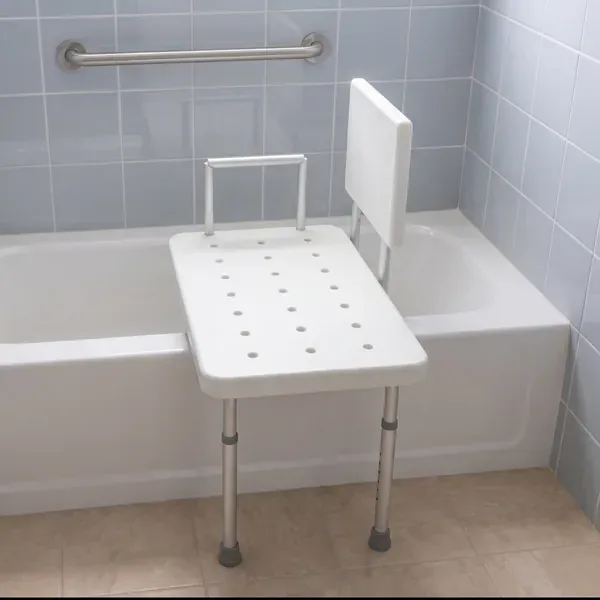 |
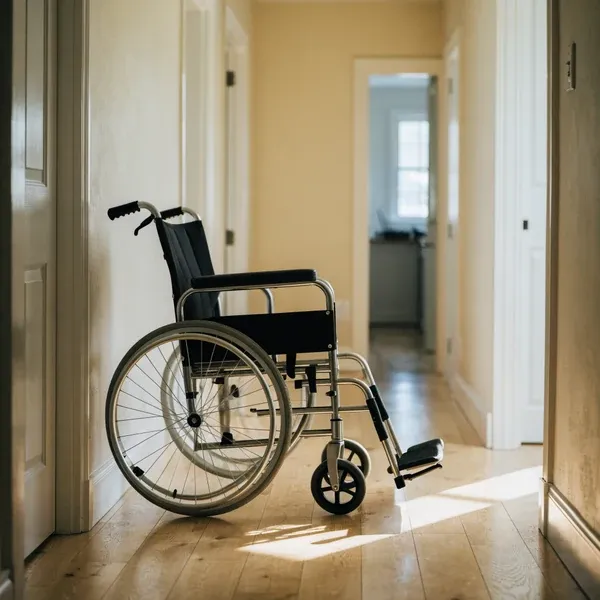 |
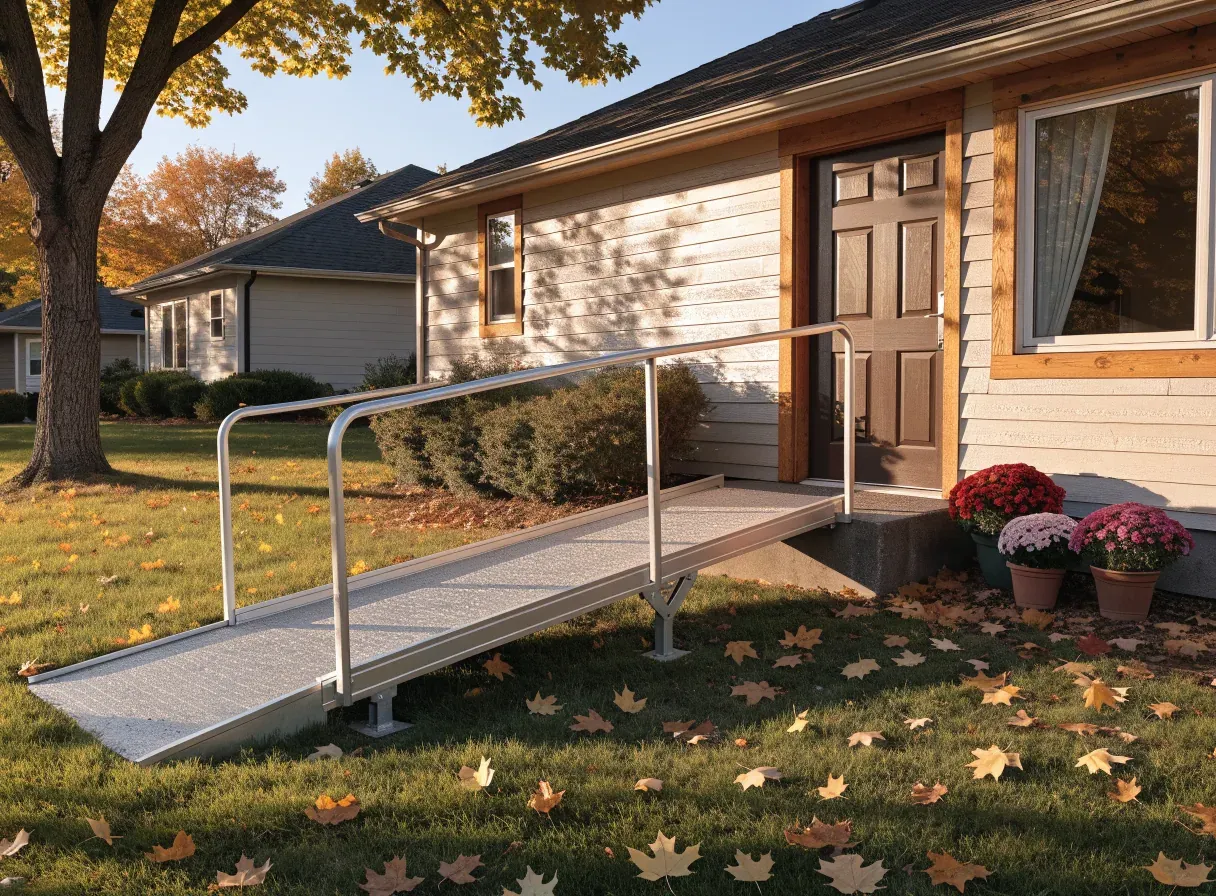 |
| Examples | Grab bars, bath seats, transfer benches, raised toilet seats, canes, walkers, hospital beds, stair lifts [1] [2] | Wheelchairs, scooters used instead of a wheelchair, crutches [1] [2] | Ramps, wider halls and doorways, lower kitchen or bathroom cabinets [2] [3] |
| What you need | A prescription and the receipt [1] | The receipt [1] | A severe and prolonged mobility impairment (or a lack of normal physical development), the receipts and a breakdown of the costs [2] |
Home safety items on the CRA’s list
The CRA keeps a list of common medical expenses that shows whether each one needs a prescription [1]. This table pulls out the items that come up in home safety, with the wording from the CRA’s guide [2].
| Item | What the CRA lists | Prescription needed? | Our guide |
|---|---|---|---|
| Grab bars, bath seats, transfer benches, raised toilet seats | “Bathroom aids” that help a person get in or out of a tub or shower, or on or off a toilet. The list names grab bars, grips and rails [1] [2] | Yes [1] | Grab bars, shower chairs, transfer benches, raised toilet seats |
| Canes, walkers and rollators | “Walking aids”: devices designed only to help a person with a mobility impairment [2] | Yes [1] | Rollator vs walker vs cane |
| Crutches | Listed [2] | No [1] | |
| Wheelchairs | Wheelchairs and wheelchair carriers [2] | No [1] | |
| Scooters | A scooter used instead of a wheelchair [2] | No [1] | |
| Hospital beds | Including attachments [2] | Yes [1] | Bed rails and assist handles |
| Stair lifts | A power-operated chair for a stairway, including installation [2] | Yes [1] | Stair lift costs |
| Platform and vehicle lifts | Power-operated lifts that help a person with a disability reach other parts of a building or get into a vehicle [2] | Yes [1] | |
| Ramps, wider doorways, lower cabinets | Renovation costs, under the conditions below [2] | No [1] | |
| Driveway changes | Changes that make it easier to get to a bus, for a person with a severe and prolonged mobility impairment [2] | No [1] | |
| Moving to a more accessible home | Reasonable moving costs, up to C$2,000. Ontario’s provincial credit allows up to C$3,525 [2] | No [1] | |
| Visual fire alarms | Visual or vibrating signal devices for a person with a hearing impairment [2] [5] | Yes [1] | |
| Medical alert systems | Listed among expenses you can’t claim [1] [2] | Not eligible | Medical alert systems |
| Lift chairs | Not named on the CRA’s list or in its guide [1] [2] | Not listed | Lift chairs |
| Hot tubs, pools, hardwood floors | A hot tub installed at home isn’t eligible, even with a prescription [2]. Hardwood floors, hot tubs and pools are the CRA’s examples of renovation costs that generally don’t count [3] | Not eligible |
Renovations: the extra rules
Renovation costs count when they give a person access to their home, or let them move around or function in it. The reason must be that they have a severe and prolonged mobility impairment, or lack normal physical development [2] [4]. Two more conditions apply. The work must not be the kind that would normally raise the home’s value. And it must not be the kind of work people without the impairment would normally do [2] [4].
The CRA’s examples are ramps where stairs get in the way, wider halls and doorways, and lower kitchen or bathroom cabinets. Fees for an architect or contractor can count too [3]. Its examples of work that generally doesn’t count are hardwood floors, hot tubs and pools [3]. The CRA looks at each claim case by case, and it’s up to you to show the conditions are met [3].
- New homes. When a home is built for the person, only the extra cost counts. For a wider doorway, that’s the cost above a standard doorway [3] [4].
- Rented homes. The rule covers changes to the person’s home whether they own it or rent it [3]. Our guide for tenants who want grab bars covers asking a landlord.
- Rebates. Subtract any related rebates, such as GST/HST rebates [2] [3].
- Paperwork. Get a breakdown of the costs, and keep the receipts and anything that shows the person’s situation meets the conditions [2].
What the credit is worth
Add up the eligible medical expenses paid in a 12-month period that ends in the tax year. Then subtract a threshold: 3% of your net income or a set dollar amount, whichever is less [1]. The federal credit is a percentage of what’s left [4] [7].
The threshold applies to all your medical expenses for the period, not just home safety costs. Prescription drugs, dental care and the other costs on the CRA’s list count toward it too [1]. Your province or territory gives its own credit for the same expenses, on line 58689 of its Form 428. Quebec residents claim through Revenu Québec [1].
To try your own numbers, our medical expense tax credit calculator works through these steps for 2025 or 2026, for your family or for a relative who depends on you.
Very large claims. For 2025 to 2030, a top-up credit keeps the old 15% rate on non-refundable credit amounts above the top of the first tax bracket, which is C$58,523 in 2026. Finance Canada says this affects fewer than 0.3% of tax filers, for example people with a large one-time medical expense [7].
Who can claim
Line 33099 is for costs you or your spouse or common-law partner paid for yourselves, and for your children under 18 [1]. Either spouse can claim. The CRA notes it may be better for the spouse with the lower net income to claim, because 3% of a lower income is a smaller threshold [1].
Line 33199 is for other relatives who depended on you for support. These include your or your spouse’s adult children and grandchildren. They also include your or your spouse’s parents, grandparents, brothers, sisters, uncles, aunts, nephews and nieces, if they lived in Canada at some point in the year. For each one, the threshold uses that relative’s net income, not yours [1]. So if a parent depends on you for support, the devices you pay for may go on your return.
The 12 months. You can choose any 12-month period that ends in the tax year, as long as you haven’t claimed those expenses before [1]. In the CRA’s example, a couple used July 1, 2024 to June 30, 2025 for their 2025 return [1].
Money paid back. You can claim only the part of a cost that nobody has paid back or will pay back [1]. If a program pays part, such as Ontario’s Assistive Devices Program or the Home and Vehicle Modification Program, claim only your share.
This credit and the Home Accessibility Tax Credit
Many renovations could fit either credit. The Home Accessibility Tax Credit is for people who are 65 or older or eligible for the disability tax credit, and for family who support them. It covers up to C$20,000 of renovation costs a year [12], and there’s no 3% threshold to take off first [9].
For 2025, the CRA says you can claim an expense for both credits [2] [12]. From 2026, the law has changed. An expense claimed as a medical expense can’t also be claimed for the Home Accessibility Tax Credit [9] [10]. So for 2026 you choose, one expense at a time.
Which gives more depends on the numbers. Take the example above, and say the person is 65 and the ramp qualifies for both credits (our calculation):
| All of it under the medical expense credit | Ramp moved to the Home Accessibility Tax Credit | |
|---|---|---|
| Ramp, C$5,600 | Part of the C$4,800 above the threshold | 14% of C$5,600 = C$784 |
| Bath aids, C$400 | Part of the C$4,800 above the threshold | C$400 is below the C$1,200 threshold, so nothing |
| Federal credit | C$672 | C$784 |
If other medical costs already cover the threshold, the two come out the same at 14%. Items that won’t become a permanent part of the home, such as bath seats and walkers, generally can’t go under the Home Accessibility Tax Credit [12]. They stay with the medical expense credit. A tax professional can help you choose. Our Home Accessibility Tax Credit guide and tax credit calculator cover the other credit.
A cost claimed as a medical expense also can’t go into a claim for the Multigenerational Home Renovation Tax Credit [3].
Where to buy
These are common items in the CRA’s bathroom aids and walking aids. Each one counts as a medical expense only with a prescription [1]. The rows come from our guides to each type, one product per type that’s sold in both countries. The figures are the makers’. We haven’t tested the products.
| Option | Type | Details | Sold in | Where to buy |
|---|---|---|---|---|
| Moen Home Care 8724 grab bar [13] | Grab bar | 24 in (610 mm), stainless steel; holds up to 500 lb. Fix it into studs or backing | Canada and US | See it at Amazon: Moen Home Care 8724 grab bar (opens in a new tab) |
| Drive Medical Deluxe Aluminum Bath Chair RTL12202KDR [14] | Shower chair | Chair with a back; seat 19¼ by 11½ in; legs adjust in 1 in steps; 300 lb | Canada and US | See it at Amazon: Drive Medical Deluxe Aluminum Bath Chair RTL12202KDR (opens in a new tab) |
| Moen Home Care Transfer Bench DN7105 [15] | Tub transfer bench | Back and arms; aluminum legs that lock at the same height; for users under 400 lb | Canada and US | See it at Amazon: Moen Home Care Transfer Bench DN7105 (opens in a new tab) |
| Drive Medical Raised Toilet Seat with Lock RTL12064 [16] | Raised toilet seat | Adds 4 in; locks to the bowl without tools; fits standard toilets; 400 lb | Canada and US | See it at Amazon: Drive Medical Raised Toilet Seat with Lock RTL12064 (opens in a new tab) |
| Drive Medical Deluxe Folding Walker with 5" Wheels 10210-1 [17] | Walker | Two front wheels; handles 32 to 39 in; 350 lb | Canada and US | See it at Amazon: Drive Medical Deluxe Folding Walker with 5" Wheels 10210-1 (opens in a new tab) |
| Stander Wonder Rollator 4350 [18] | Rollator | Handles 33 to 36 in (a short size is 27 to 30 in); seat and backrest; 6 in wheels; 250 lb | Canada and US | See it at Amazon: Stander Wonder Rollator 4350 (opens in a new tab) |
Get the prescription before you buy, and keep it with the receipt. Our guides to each type compare more products and explain how to fit them.
Claiming home safety costs as medical expenses
From simpleaging.com. This checklist is general information, not medical advice.
Before you buy or build
- If the item needs a prescription, get it first from a medical practitioner [1]. The CRA’s list shows who counts in your province [8].
- For a renovation, check that it’s for a person with a severe and prolonged mobility impairment, and that it helps them get into or move around the home [2].
- Ask the contractor for a breakdown of the costs [2].
- Keep every receipt. Each must show the name of the company or person you paid [1].
- Note anything a program or insurer pays back. You can claim only the rest [1].
At tax time
- Pick the 12-month period, ending in the tax year, that gives the largest claim. Leave out anything you claimed before [1].
- Put costs for yourself, your spouse and your children under 18 on line 33099. Put other dependants’ costs on line 33199 [1].
- Compare which spouse should claim. The one with the lower net income may get more [1].
- Claim the provincial or territorial credit on line 58689 of your Form 428 [1].
- For 2026 and later, don’t also claim the same renovation cost for the Home Accessibility Tax Credit [9] [10].
- Don’t send receipts or prescriptions with your return. Keep them in case the CRA asks [1].
Costs and funding
Questions to ask
An occupational therapist, physiotherapist or doctor
- Which device or change would help most, and can you write the prescription for it?
- Can you put in writing why I need this renovation, in case the CRA asks?
Your contractor or supplier
- Can my receipt show your business name and a breakdown of the costs?
- Which part of the cost is the accessibility work, and which is general work?
A tax professional or the CRA
- For 2026, should this renovation go under the medical expense credit or the Home Accessibility Tax Credit?
- Which 12-month period, and which family member, gives the largest claim?
Safety notes and when to talk to a professional
Choose for the person, not the credit. The federal credit is worth about 14% of what you spend above the threshold. The device or change still has to suit the person who’ll use it. Our guides compare the options for shower chairs, transfer benches and walkers.
When to talk to a professional. If someone has fallen, feels unsteady or worries about falling, talk to a doctor. A doctor can look for causes and may refer the person to a physiotherapist or occupational therapist, who can suggest the right equipment. For the tax side, the CRA or a tax professional can confirm what counts.