Multigenerational Home Renovation Tax Credit explained
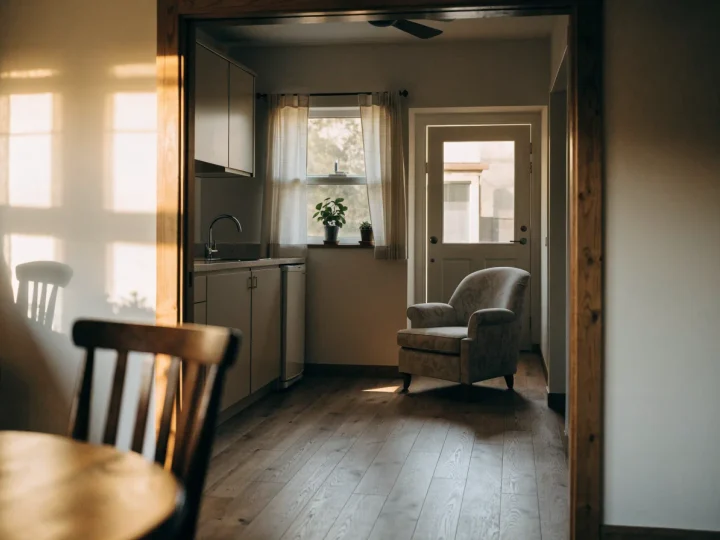
How the Multigenerational Home Renovation Tax Credit works: what the secondary unit needs, who qualifies, what it pays for 2025 and 2026, and how to claim.
This article is general information, not medical advice. For advice about your own situation, talk to a doctor, occupational therapist, physiotherapist or other qualified professional. In an emergency, call 911.
Quick answer
The Multigenerational Home Renovation Tax Credit is a federal credit for building a self-contained secondary unit. The unit lets a senior, or an adult who qualifies for the disability tax credit, live with a relative. The credit is refundable, so you get it even if you owe no tax [1]. You can claim up to C$50,000 of renovation costs. For renovations finished in 2025 the credit is 14.5%, up to C$7,250 [1]. The credit uses the lowest federal tax rate, which drops to 14% for 2026, so a renovation finished in 2026 earns up to C$7,000 [5] [6]. The unit needs its own entrance, kitchen, bathroom and sleeping area, and only one renovation can ever be claimed for the same person [2].
One claim per person, for life
Only one renovation can ever be claimed for the same qualifying person, no matter who claims it [2] [5]. If a parent’s suite is built in stages, or a family moves and builds again, the second project gets nothing. Plan the suite the first time with the person’s future needs in mind, such as a step-free entrance and a bathroom with room for a walker.
What counts as a secondary unit
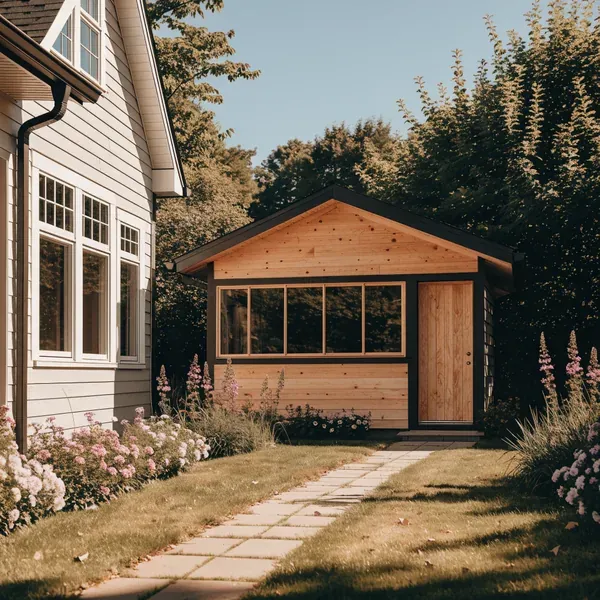
The CRA says a secondary unit is a self-contained housing unit with a private entrance, kitchen, bathroom and sleeping area. It must be newly built, or made from a space that wasn’t already a secondary unit under local rules. It must also meet local permits, codes and by-laws [2]. It doesn’t have to be attached to the house. A separate building counts if it’s on the same land, usually up to half a hectare [2].
| Basement suite | Garden suite | Addition | |
|---|---|---|---|
| What it looks like | 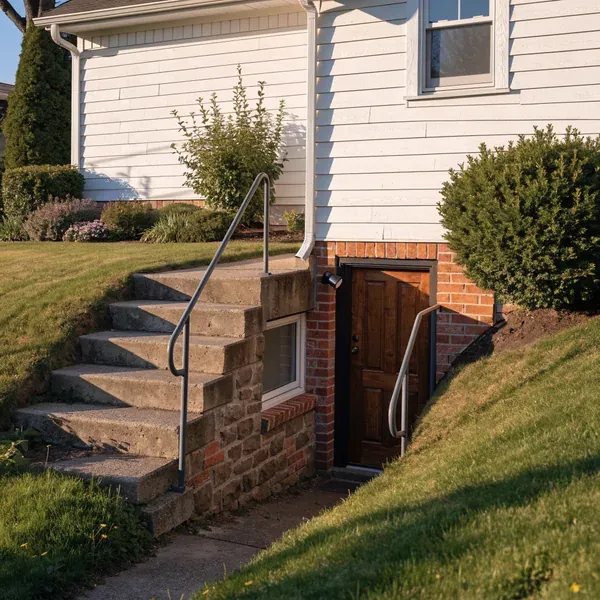 |
 |
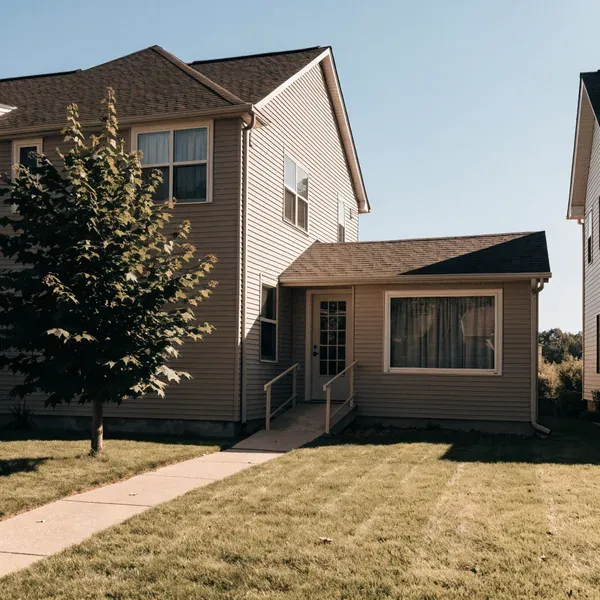 |
| Where it is | Inside the house, below the main floor | A separate building on the same property [2] | Built onto the house, on one level |
| For the credit, it needs | Its own entrance, kitchen, bathroom and sleeping area, and local approval [2] | The same, plus local rules that allow a second unit on the lot [2] | The same [2] |
| Worth thinking about | Stairs down to the unit; a walk-out entrance avoids them | A level path to the main house in winter | Often the easiest to make step-free |
The CRA’s own examples show the line. A second storey with its own entrance, bedroom, bathroom and kitchen qualified. A sunroom turned into a bedroom with a bathroom but no kitchen didn’t, because it wasn’t a full unit. A basement apartment built for a paid live-in caregiver didn’t qualify either, because the caregiver wasn’t a relative [2].
Who qualifies
Three people matter: the person the suite is for, the relative they’ll live with, and whoever pays and claims.
The qualifying individual is the person the renovation is for. They must be 65 or older at the end of the year the renovation is completed. Or they can be 18 to 64 and eligible for the disability tax credit at any time in that year [2].
A qualifying relation is a relative who is 18 or older. That means a parent, grandparent, child, grandchild, brother, sister, aunt, uncle, niece or nephew of the qualifying individual, or of their spouse or common-law partner [2]. The renovation must let the qualifying individual live with a qualifying relation. Either of them can be the one who moves into the new unit [5].
The eligible individual is who claims the credit. They must live in Canada all year. They must also live in the home, or plan to within 12 months after the renovation ends, as the qualifying individual, their spouse or partner, or a qualifying relation. Or they must own the home and be a qualifying relation [2]. The person who claims must be the one who paid the expenses [4].
The home must be in Canada. It must be owned by the qualifying individual or a qualifying relation, jointly or not, at some point in the year. And both of them must live in it within 12 months after the renovation ends [2].
In the CRA’s example, a daughter who owned the house and a father who moved in could both claim their own shares of the cost. A brother who paid part of the cost but neither owned nor lived in the house could not [2].
What the credit pays
The credit is a percentage of up to C$50,000 of qualifying costs per renovation. That percentage is the lowest federal income tax rate for the year [5] [7]. The government cut that rate from 15% to 14.5% for 2025, and to 14% for 2026 and later years [6].
| Year the renovation is completed | Rate | Most you can get |
|---|---|---|
| 2025 | 14.5% [1] | C$7,250 [1] |
| 2026 and later | 14% [6] | C$7,000 (14% of C$50,000) |
Older pages still show 15% and C$7,500, the figures from when the credit began in 2023 [8].
Because it’s refundable, you get the money even if you owe no tax. In the CRA’s example, a person who owed C$2,000 before the credit and claimed the full C$7,250 received a refund of C$5,250 [3].
Sharing the cost. When relatives share the cost, more than one can claim. Each must be an eligible individual, each claims only what they paid, and the claims together can’t go over C$50,000 [4]. The CRA’s page shows two ways to split a C$62,000 project, including giving one person the largest claim their own spending allows and the other the rest [4].
Two suites in one year. If you finish two qualifying renovations for two different qualifying individuals in the same year, each gets its own claim up to C$50,000 [3].
What you can claim, and what you can’t
Qualifying expenses are reasonable costs directly tied to the renovation, paid before the renovation period ends. They include goods and services, such as work by electricians, plumbers, carpenters or architects, plus permits and equipment rentals [3]. If you do the work yourself, you can claim building materials, fixtures, equipment rentals, plans and permits, but not your own labour or tools [3].
These don’t qualify [3]:
- routine repairs and maintenance
- household appliances, and electronic home-entertainment devices
- housekeeping, security monitoring, gardening and similar services
- financing costs
- work or goods from a relative or other person not at arm’s length, unless they’re registered for GST/HST
- anything you were reimbursed for, including grants and GST/HST rebates
- expenses without receipts
- expenses already claimed under the medical expense tax credit or the Home Accessibility Tax Credit.
Where to buy
Goods bought for the renovation, including fixtures, count as qualifying expenses [3]. So fixtures that make the suite safer for a senior can go into the claim if they’re installed as part of the build. The items below are common ones to plan in. A grab bar needs solid backing in the wall, which is easiest to add while the walls are open. The grab bar’s figures are the maker’s. We haven’t tested the products.
| Option | Type | Details | Sold in | Where to buy |
|---|---|---|---|---|
| Moen Home Care 8724 grab bar [10] | Grab bar | 24 in (610 mm), stainless steel; holds up to 500 lb. Fix it into studs or backing | Canada and US | See it at Amazon: Moen Home Care 8724 grab bar (opens in a new tab) |
| Wall-mounted fold-down shower seats | Fold-down shower seat | Folds flat against the wall when not in use. Needs backing in the wall, like a grab bar | Canada and US | See options at Amazon: Wall-mounted fold-down shower seats (opens in a new tab) |
| Comfort-height toilets | Comfort-height toilet | A taller bowl, closer to chair height, so there is less distance to sit down and stand up | Canada and US | See options at Amazon: Comfort-height toilets (opens in a new tab) |
| Handheld shower heads | Handheld shower | Useful from a seat; a slide bar lets the height change | Canada and US | See options at Amazon: Handheld shower heads (opens in a new tab) |
Installed as part of the renovation, these are goods bought for the renovation and can be part of the claim. Keep the receipts. Portable items bought later, such as a shower chair or a plug-in night light, aren't renovation costs.
Our guides cover grab bar placement, shower chairs and fold-down seats and comfort-height toilets.
Claiming the credit
From simpleaging.com. This checklist is general information, not medical advice.
Before and during the work
- Confirm with your municipality that a secondary unit is allowed and get the permits. The unit must meet local requirements [2].
- Confirm the person the suite is for will be 65 or older at the end of the year the work finishes, or eligible for the disability tax credit [2].
- Decide who will pay, since only the people who paid can claim [4].
- Keep every invoice and receipt. Each should show the vendor or contractor, their address, and their GST/HST number if they have one. It should also show what was bought or done and when, the address of the work, the amount, and proof of payment [4].
- If a relative does paid work, check that they’re registered for GST/HST. Otherwise their work doesn’t count [3].
At tax time
- Claim in the tax year the renovation is completed, for example when it passes its final inspection, even if it started in an earlier year [4].
- Fill out Schedule 12 and enter the credit on line 45355 of the return [4].
- If costs were shared, agree on each person’s share before filing [4]. If claimants can’t agree, the law lets the CRA set the portions [5].
- Don’t claim the same expense under the medical expense credit or the Home Accessibility Tax Credit [4].
Costs and funding
Questions to ask
Your municipality
- Does my zoning allow a secondary unit, or a separate garden suite?
- What permits and inspections does the unit need, and what will the final inspection cover?
Your contractor
- Can you give invoices that show your GST/HST number, the work done, the dates and the address?
- Can the entrance and bathroom be built step-free, with backing in the walls for grab bars?
A tax professional or the CRA
- Which family member should claim, and how should we split the costs?
- Do any of our costs belong under the Home Accessibility Tax Credit or the medical expense credit instead?
Safety notes and when to talk to a professional
Build for later needs now. The credit can be used only once for each person, so it’s worth planning the suite for the years ahead. Think about a step-free entrance, wide doorways, a shower you can walk or roll into, and solid backing in the bathroom walls for grab bars. Our guides to grab bar placement and making stairs safer can help with the details.
When to talk to a professional. An occupational therapist can look at the plans and the person’s needs and suggest what the suite should include. For the tax side, the CRA or a tax professional can confirm who should claim and what counts.