Raised toilet seat vs safety frame vs comfort-height toilet
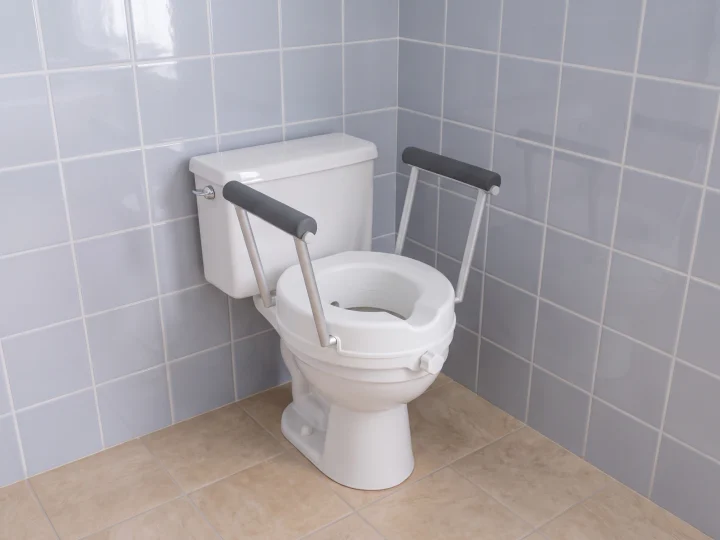
How a raised toilet seat, a toilet safety frame and a comfort-height toilet differ, what to measure, and ten options with the makers' specs.
This article is general information, not medical advice. For advice about your own situation, talk to a doctor, occupational therapist, physiotherapist or other qualified professional. In an emergency, call 911.
Quick answer
A raised toilet seat sits on the toilet you have and lifts the seat by a few inches, so you don’t lower yourself as far. A toilet safety frame adds two arms to hold and push down on, without changing the height. A comfort-height toilet replaces the whole toilet with a taller one. Some people choose a raised seat when getting down low is the hard part, a frame when they need something to hold, and a raised seat with arms when they need both. A taller toilet is a plumbing job, so it’s the permanent option.
The differences at a glance
| Raised toilet seat | Toilet safety frame | Comfort-height toilet | |
|---|---|---|---|
| What it looks like | 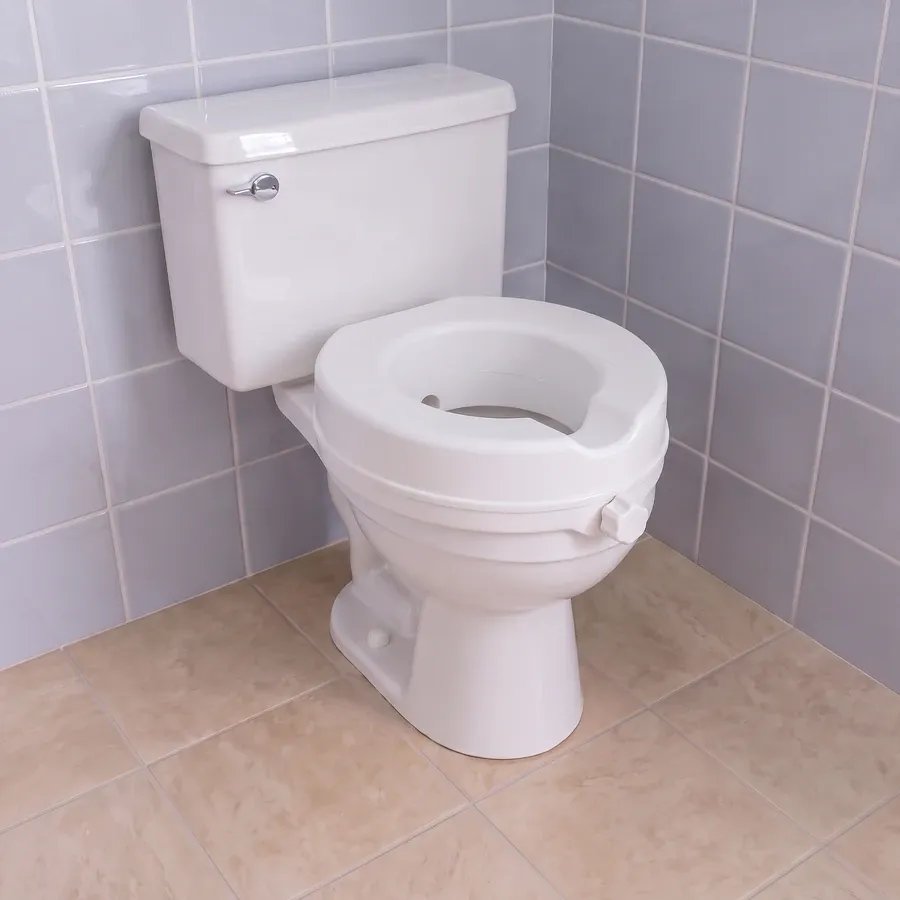 |
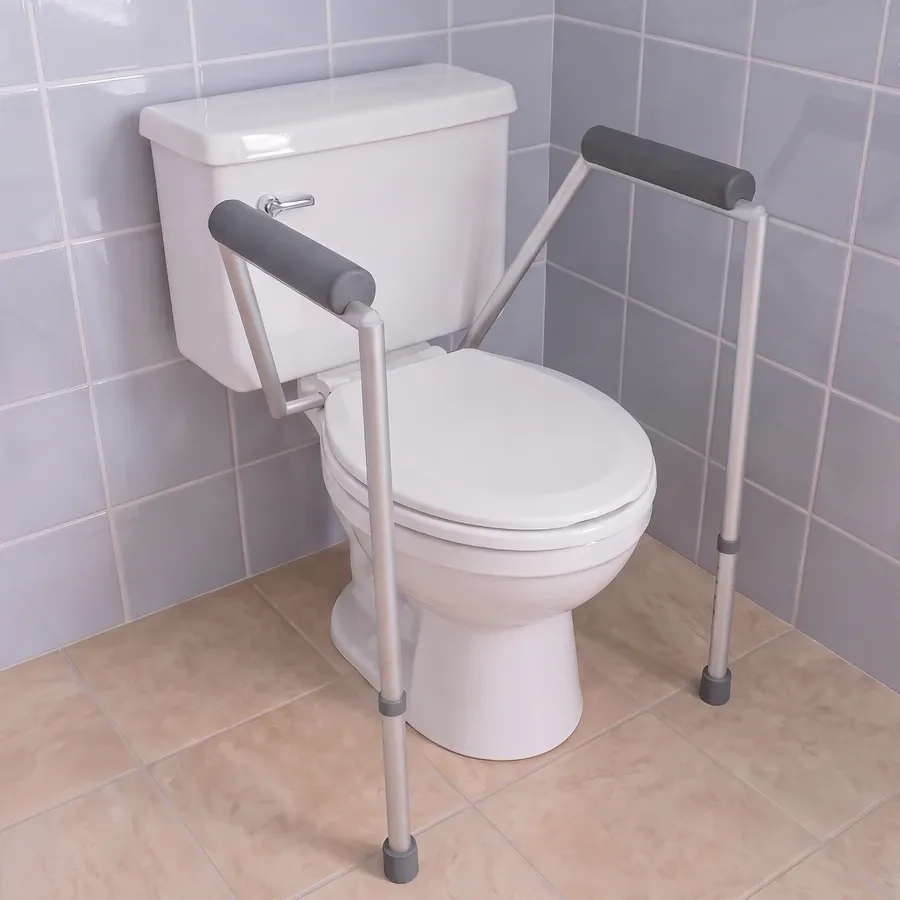 |
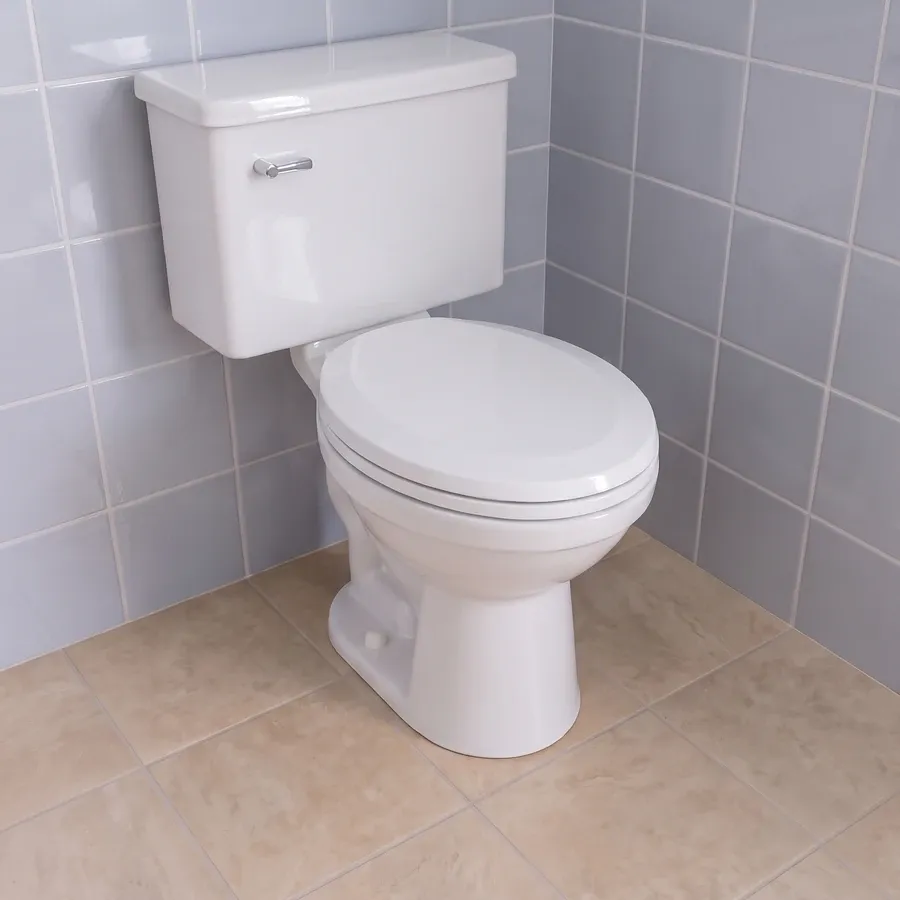 |
| What it is | A plastic riser that sits on or locks to the bowl | Two arms around the toilet, on a rail or frame | A new toilet with a taller bowl |
| What it changes | Adds about 3½ to 5 in on the seats below | Gives you arms to hold and push down on. The height stays the same | Seat height of 17 in or more, about 2 in higher than standard [1] |
| Putting it in | Many go on without tools | Bolts on under the toilet seat, or stands on the floor | The old toilet comes out. Usually a job for a plumber |
| Moves with you | Yes | Yes | No, it stays with the house |
| For others in the home | Too high for some. Many can be taken off | The arms can be in the way for some | Works like any toilet |
| Makers’ weight limits | 250 to 400 lb on the seats below | 250 to 300 lb on the frames below | Ask the maker |
Where to buy raised toilet seats and safety frames
Pharmacies, home health and medical supply stores, and hardware stores sell raised seats and safety frames in Canada and the US. You can also shop online. The tables list products whose makers publish their specs. The figures come from the makers’ pages and instructions, linked in the sources. We haven’t tested the products ourselves.
| Option | Height added | Maker's weight limit | Details | Sold in | Where to buy |
|---|---|---|---|---|---|
| Drive Medical Hinged Toilet Seat Riser RTL12608 [2] | 3½ in | 250 lb | Bolts on under your own seat and lid; hinged to lift out of the way. For elongated bowls; model RTL12607 fits standard bowls | Canada and US | See it at Amazon: Drive Medical Hinged Toilet Seat Riser RTL12608 (opens in a new tab) |
| Drive Medical Raised Toilet Seat with Lock RTL12064 [3] | 4 in | 400 lb | Locks to the bowl; no tools. Fits standard toilets | Canada and US | See it at Amazon: Drive Medical Raised Toilet Seat with Lock RTL12064 (opens in a new tab) |
| Moen Home Care Elevated Toilet Seat DN7020 [4] | 5 in | 250 lb | 5 in at the front, 6 in at the back. Sits on the bowl rim and does not lock on; no tools. Fits most round and elongated toilets | Canada and US | See it at Amazon: Moen Home Care Elevated Toilet Seat DN7020 (opens in a new tab) |
| Carex E-Z Lock Raised Toilet Seat with Armrests FGB311C0 [5] | 5 in | 300 lb | Locks on; padded armrests 17¼ in apart. Fits most toilets | Canada and US | See it at Amazon: Carex E-Z Lock Raised Toilet Seat with Armrests FGB311C0 (opens in a new tab) |
| Drive Medical PreserveTech Secure Lock Raised Toilet Seat RTL12C003-WH [6] | 5 in | 350 lb | Locks at three points; no tools; padded arms adjust in height or come off. Fits most standard and elongated toilets | Canada and US | See it at Amazon: Drive Medical PreserveTech Secure Lock Raised Toilet Seat RTL12C003-WH (opens in a new tab) |
Height added is the maker's figure. Drive Medical uses “standard” for round bowls. Weight limits assume the seat is installed and used as the maker instructs.
| Option | How it stays in place | Maker's weight limit | Details | Sold in | Where to buy |
|---|---|---|---|---|---|
| Moen Home Care Toilet Safety Rail DN7015 [7] | Bolts under the toilet seat | 250 lb | Held on by the toilet seat bolts; molded armrests | Canada and US | See it at Amazon: Moen Home Care Toilet Safety Rail DN7015 (opens in a new tab) |
| Carex Toilet Support Rail FGB36800 [8] | Bolts under the toilet seat | 300 lb | Width adjusts from 16 to 18 in; cushioned grips | Canada and US | See it at Amazon: Carex Toilet Support Rail FGB36800 (opens in a new tab) |
| Drive Medical Toilet Safety Frame with Padded Arms RTL12000 [9] | Bolts under the seat, with legs to the floor | 300 lb | Arms set 19 or 23½ in apart; height adjusts in 1 in steps | Canada and US | See it at Amazon: Drive Medical Toilet Safety Frame with Padded Arms RTL12000 (opens in a new tab) |
| Carex Stand-Alone Adjustable Toilet Safety Frame FGE815C0 [23] | Stands on its own | 300 lb | Height 24 to 29 in; hand grips 22.8 in apart | Canada and US | See it at Amazon: Carex Stand-Alone Adjustable Toilet Safety Frame FGE815C0 (opens in a new tab) |
| Carex Deluxe Folding Commode FGB34100 [11] | 3-in-1 commode | 300 lb | Use as a stand-alone commode, a raised seat or a safety frame; height 17 to 23½ in | Canada and US | See it at Amazon: Carex Deluxe Folding Commode FGB34100 (opens in a new tab) |
Makers say to check often that a rail or frame is still secure. Weight limits assume it is set up and used as the maker instructs.
More options at Amazon: raised toilet seats (opens in a new tab), toilet safety frames (opens in a new tab), 3-in-1 commodes (opens in a new tab) and chair-height toilets (opens in a new tab).
Before you buy: measure and compare
From simpleaging.com. This checklist is general information, not medical advice.
Take these measurements with a tape and compare them with the specs in the tables.
Measure first
- Floor to the top of the toilet seat. This is the height you sit at now.
- Floor to the top of the bowl, with the seat and lid lifted. A raised seat sits on the bowl, so its height is added to this measurement [22].
- The person’s lower leg: floor to the crease behind the knee, sitting with feet flat.
- Bowl shape. Measure from the middle of the two seat bolts to the front of the bowl. About 16½ in means a round bowl, and about 18½ in means elongated [12].
- The space between the toilet and the wall on each side, if you’re thinking about arms [22].
- The person’s width at the hips, sitting, to compare with the space between the arms.
- For a new toilet: the rough-in, from the wall (not the baseboard) to the bolts that hold the toilet to the floor. Kohler says 12 in is the most common, and some are 10 in or 14 in [1].
Features to compare
- Height. Drive Medical’s sizing guide adds 2 in to the lower leg measurement, then subtracts the height of the bowl. The answer is the height of raised seat to look for [22]. An occupational therapist or physiotherapist can check it for you.
- Weight limit. The maker’s limit is above the person’s weight, with room to spare.
- Fit. Made for round bowls, elongated bowls or both.
- How it holds on. The same guide ranks raised seats from least to most secure fit: non-locking, locking with a knob, locking with clamps, and a riser bolted to the bowl [22]. A frame bolts on under the toilet seat, stands on the floor, or both.
- Arms. Fixed, adjustable or removable, and how far apart.
- Cleaning. Lifts off or hinges up so you can clean the toilet.
- Others in the home. A type that’s easy to remove, if others share the bathroom [22].
- Returns. You know whether the store takes back toilet products.
How each option helps
With age, more bathroom injuries happen at the toilet. A CDC study of bathroom injuries treated in US emergency rooms found that the share that happened while getting on, off or using the toilet rose with age. It was about 19% at ages 65 to 74, 27% at ages 75 to 84, and 37% at 85 and older [13].
The Public Health Agency of Canada’s home safety guide says raised toilet seats “can make getting on and off the toilet easier.” It describes them as raising the seat by 10 to 15 cm (about 4 to 6 in). Some are adjustable, some portable and some have hand rails [14].
A raised toilet seat
A raised seat makes the toilet taller, so you sit down to and stand up from a higher point. Some simply sit on the rim of the bowl. Others lock on with a knob or clamps. A riser bolts to the bowl under your own seat and lid, and a hinged riser lifts up for cleaning [2] [22]. Some raised seats have arms built in.
A toilet safety frame
A frame gives you two arms to hold as you sit down and to push down on as you stand. Some bolt on under the toilet seat, and some of those also have legs that reach the floor. Others stand on their own and set up without tools [10]. A 3-in-1 commode can do the same job. Carex says its folding commode can be used as a stand-alone commode, a raised toilet seat or a toilet safety frame [11].
Makers say the arms are for help with balance, not for your whole weight [22] [23]. A grab bar anchored in the wall is the fixed option. Our grab bar height guide shows where they go.
A comfort-height toilet
Kohler measures toilet height from the floor to the top of the seat. It says most toilets fall between 15 and 19 in, with standard toilets under 17 in. It calls toilets of 17 in or more chair-height, about 2 in higher than standard [1]. A taller toilet goes by more than one name. Kohler’s name for chair-height seating is Comfort Height [24].
Accessible washrooms in public buildings use set heights, which make a useful reference. The 2010 ADA Standards put the top of the seat 17 to 19 in (430 to 485 mm) above the floor [15]. Canada’s National Building Code puts it 430 to 460 mm (about 17 to 18 in) above the floor [16]. Homes don’t have to follow these rules.
A new toilet stays with the house and changes the height for everyone who uses it.
Using two together
If you need both height and arms, some raised seats have arms built in, like two in the table above. Drive Medical’s guide says a toilet safety frame can be paired with a raised seat that has no arms. It also says its toilet safety rail can’t be used with a raised seat [22]. Before you combine two products, ask the seller whether they fit together.
Costs and funding for toilet aids
With a raised seat or a frame, what you pay is the price of the product. A new toilet costs the toilet plus the installation. Prices vary by product, store and region, so we don’t list them.
Canada
United States
Questions to ask
An occupational therapist, physiotherapist or doctor
- Is the height the problem, pushing up the problem, or both?
- What seat height should we aim for?
- Would a frame, a wall grab bar or a 3-in-1 commode work better in this bathroom? Our 3-in-1 commode guide explains the bedside and over-the-toilet setups.
- Is a taller toilet worth it, or will a raised seat do for now?
A supplier or store
- What is the maker’s weight limit, and how much height does the seat add?
- Will it fit a round or an elongated bowl like mine?
- Can I return it if it doesn’t fit? Some sellers don’t take back toilet products. Carex, for one, says on its site that it doesn’t accept returns on toilet products, opened or unopened [5].
- How does it lock on, and how do I check that it’s secure?
A plumber
- What is the rough-in of my toilet, and will the new one fit it?
- What is the seat height of the new toilet, with the seat on?
- Will a round or an elongated bowl fit the room better?
Safety notes and when to talk to a professional
Check the fit, and sit centered. Drive Medical’s guide says to check routinely that a raised seat fits securely, and to center your weight on it [22]. Moen says not to use its elevated seat if it can rock from side to side, and to get on and off from the front [25].
Arms are for help, not for your whole weight. Drive Medical’s guide says not to put your full body weight on arm supports [22]. Carex’s guide for its stand-alone frame says to push straight down on the rails, not outward, and to use the frame on a dry floor, not on a bath mat. It says not to use the frame if you have a history of dizziness or balance problems, or need something to lean on heavily. It says to ask a health care provider whether the frame is right for you [23].
Check rails and frames that use the toilet’s bolts. Moen’s instructions for its toilet safety rail warn that a rail that isn’t installed correctly can become loose. They say to check that the rail is secure after installing it, and again from time to time [7].
Hold the right things. The Public Health Agency of Canada says towel racks and soap dishes “should never be used for support” [14]. A grab bar anchored in the wall is made to be held. In buildings covered by the ADA Standards, a grab bar and its mounting must hold a force of 250 pounds [15].
Mind the weight limit. The makers’ limits in the tables run from 250 to 400 lb. The limit should be above the person’s weight.
When to talk to a professional. If someone has fallen, feels unsteady or worries about falling, talk to a doctor. A doctor can look for causes and may suggest seeing a physiotherapist or occupational therapist. An occupational therapist can watch how a person gets on and off the toilet and say whether a raised seat, a frame, grab bars or a taller toilet suits them.