Home modification grants and help for seniors in the US
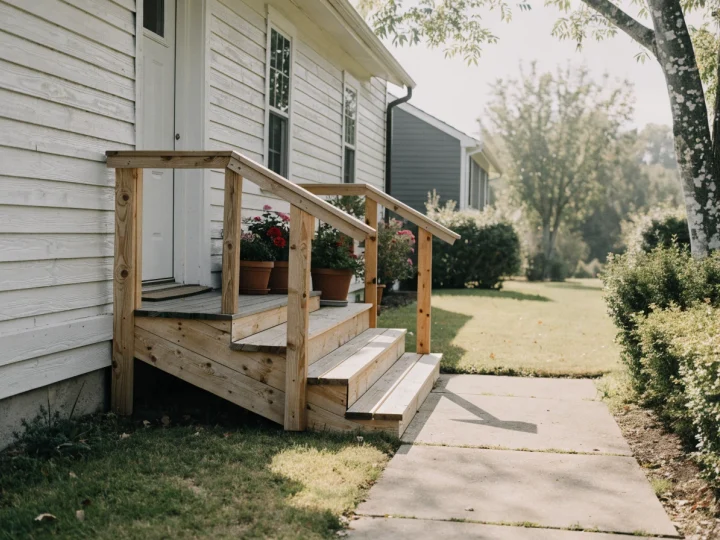
Grants and help for home modifications in the US: what Medicare, Medicaid, the VA, USDA and the IRS cover for grab bars, ramps and repairs, and how to apply.
This article is general information, not medical advice. For advice about your own situation, talk to a doctor, occupational therapist, physiotherapist or other qualified professional. In an emergency, call 911.
Quick answer
Original Medicare doesn’t pay for most home safety items. Its equipment list denies coverage for grab bars, bathtub seats, raised toilet seats and stairway elevators [5]. It does cover some equipment a provider prescribes for use at home, such as walkers and hospital beds. You pay 20% after the Part B deductible [1] [2]. Help with the rest comes from several places. Some Medicare Advantage plans offer bathroom safety devices [6]. State Medicaid waivers can pay for ramps and grab bars [9]. The VA has grants for veterans [10] [13]. USDA has repair grants and loans for low-income rural homeowners [14]. And if you itemize, the IRS lets you deduct medical costs above 7.5% of your income, including many home changes [18].
Ask before you buy or build
Most of these programs pay only when the rules are followed before you spend. Medicare pays for equipment only from suppliers enrolled in Medicare [2]. A Medicare Advantage safety benefit must be recommended by a licensed medical professional as part of a care plan [6]. Medicaid pays for home changes that are in your service plan [9]. The VA’s home change grant needs a VA prescription and an application with an itemized estimate [10]. So call the program first, and get the paperwork it asks for, before you order anything or hire a contractor.
Home modification grants and programs at a glance
| Program | Who it’s for | What it can pay for | How much |
|---|---|---|---|
| Original Medicare (Part B) | People with Medicare, when a provider prescribes the item for use at home [2] | Equipment such as walkers, including rollators, hospital beds and commode chairs. Not grab bars, bath seats, raised toilet seats or stairway elevators [2] [3] [4] [5] | You pay 20% after the Part B deductible [1] |
| Medicare Advantage extras | Members of plans that offer them [6] | Safety devices such as grab bars, shower stools, raised toilet seats and stair rails. Not structural changes [6] | Set by each plan |
| Medicaid home and community-based waivers | People who need the level of care a nursing home gives, in states that offer it [8] | Ramps, grab bars, wider doorways and bathroom changes [9] | Set by each state |
| VA HISA grant | Veterans eligible for VA medical care [12] | Medically needed changes: entrances, bathrooms, lower counters and sinks, permanent ramps [10] | Up to $6,800 or $2,000 over a lifetime [11] |
| VA SAH and SHA grants | Veterans with certain severe service-connected disabilities [13] | Buying, building or changing a home [13] | Up to $126,526 (SAH) or $25,350 (SHA) for fiscal year 2026 [13] |
| USDA Section 504 | Rural homeowners with very low incomes; grants are for those 62 or older [14] | Grants: removing health and safety hazards. Loans: repairs and improvements [14] | Grants up to $10,000; loans up to $40,000 at 1% [14] |
| Area Agency on Aging | People 60 or older [15] | Home modification and repair funds, where available [15] | Varies by area |
| IRS medical expense deduction | People who itemize deductions [18] | Medical costs, including home changes for a disability [18] | Only costs above 7.5% of your income count [18] |
Medicare
Original Medicare. Part B covers durable medical equipment: equipment that lasts, is used for a medical reason and is used in your home [1]. Walkers, including rollators, and hospital beds are covered when your provider prescribes them for use at home [2] [3]. Our guide to rollators, walkers and canes explains the differences. Commode chairs are covered too [4]. Medicare’s reference list limits them to people confined to their bed or room [5]. After the Part B deductible, you pay 20% of the Medicare-approved amount, if the supplier accepts assignment. Medicare pays only if you get the item from a supplier enrolled in Medicare [1] [2].
The equipment benefit doesn’t cover most bathroom safety items. Medicare’s reference list says to deny grab bars as a “self-help device,” and bathtub lifts, bathtub seats and raised toilet seats as convenience or hygienic items. It also denies elevators and stairway elevators [5]. Seat lifts are partly covered under strict rules; our lift chair guide explains them.
Medicare Advantage. Since 2019, CMS has let Medicare Advantage plans offer “Home & Bathroom Safety Devices & Modifications” as an extra benefit. Its examples are shower stools, hand-held showers, bathroom and stair rails, grab bars, raised toilet seats, temporary or portable ramps, night lights and stair treads. A plan may also pay for installation and a home safety check by a qualified health professional. It can’t pay for structural changes, such as permanent ramps or wider doorways [6]. Plans choose whether to offer it, so ask yours. Medicare Advantage plans must cover the same kinds of medically necessary equipment as Original Medicare, but your suppliers and costs depend on the plan [7].
Medicaid
Nearly all states run home and community-based services waivers. They help people who would otherwise need a nursing home’s level of care to get care at home instead [8]. CMS’s standard description of “home accessibility adaptations” under these waivers includes ramps and grab bars, wider doorways, bathroom changes, and electrical and plumbing work needed for medical equipment. Changes of general use, with no direct medical benefit, are left out, and so are additions that enlarge the home unless the change needs them [9]. The change must be in your service plan [9]. Each state decides who qualifies and which services it offers, and sets the most people each waiver can serve, so places can be limited [8]. Ask your state Medicaid office or your Area Agency on Aging.
Help for veterans
HISA grant. The VA’s Home Improvements and Structural Alterations grant pays for medically needed changes to a veteran’s main home [10]:
- getting in and out of the home
- bathrooms, such as roll-in showers
- lower kitchen or bathroom counters and sinks
- permanent ramps to the home
- plumbing or electrical work for home medical equipment. It doesn’t pay for portable ramps, porch lifts or stair glides, hot tubs, decks, home security systems or routine repairs [10].
The grant is a lifetime amount. It’s up to $6,800 for a service-connected disability, or for any disability if the veteran is rated at least 50% service-connected. Otherwise it’s up to $2,000 [10] [11]. To apply, you need [10]:
- a prescription written or approved by a VA physician
- VA Form 10-0103
- an itemized estimate for labor, materials, permits and inspections
- a color photo of the area
- if you rent, a signed, notarized statement from the owner. Contact your local VA Prosthetic and Sensory Aids Service, and apply before the work starts [10] [12].
Disability housing grants. Veterans with certain severe service-connected disabilities, such as the loss or loss of use of more than one limb, may get a Specially Adapted Housing grant. For fiscal year 2026 it was up to $126,526. A Special Home Adaptation grant, up to $25,350, covers other disabilities, such as the loss or loss of use of both hands. A veteran living for a while in a family member’s home may get a smaller Temporary Residence Adaptation grant [13]. The VA adjusts these amounts each year [13].
USDA home repair loans and grants
USDA Rural Development’s Section 504 Home Repair program serves homeowners in eligible rural areas who live in the home and can’t get affordable credit elsewhere [14]. Its grants are for people 62 or older with very low household income, and they must be used to remove health and safety hazards. Grants go up to $10,000 over a lifetime, and must be repaid if you sell the home within 3 years. Loans go up to $40,000, at a fixed 1% for 20 years, for repairs and improvements. You can combine the two for up to $50,000 [14]. Income limits are set by county, and USDA’s eligibility site shows whether an address counts as rural. Apply through your local Rural Development office, any time of year [14].
Local help through your Area Agency on Aging
If you’re 60 or older, your local Area Agency on Aging may have home modification and repair funds from the Older Americans Act. Some states and towns also offer low-interest loans or grants [15]. The Eldercare Locator connects you with your local agency: call 1-800-677-1116 [16]. HUD also gives grants to local nonprofits and housing authorities for low-cost home changes that help low-income older adults stay at home [17]. You don’t apply to HUD for these. Ask your Area Agency on Aging which local groups have funding.
If you rent, the government’s long-term care site says landlords must allow reasonable modifications to meet your needs. Talk with your landlord about who pays [15].
The IRS medical expense deduction
You can deduct medical and dental costs on Schedule A, but only the part above 7.5% of your adjusted gross income, and only if you itemize [18]. Medical costs include home changes whose main purpose is medical care for you, your spouse or a dependent. If a change raises your home’s value, only the cost above that rise counts [18].
The IRS says changes made for a disability usually don’t raise a home’s value, so their full cost can count. Its list includes ramps, wider doorways and hallways, railings and support bars in bathrooms, lower kitchen cabinets, porch lifts and other lifts, and changes to stairways. It also includes “Adding handrails or grab bars anywhere (whether or not in bathrooms).” Elevators generally do add value. Only reasonable costs count, not extras for looks [18].
Will itemizing help? Only if your itemized deductions add up to more than the standard deduction. For 2025, that’s $17,750 for a single person 65 or older, and $34,700 for a married couple filing jointly who are both 65 or older [19]. For 2026, the base amounts rise to $16,100 for a single person and $32,200 for a couple, before the extra amount for age [21]. Separately, for 2025 through 2028, people 65 or older may get a new senior deduction of up to $6,000 each. It’s reduced above $75,000 of modified adjusted gross income, or $150,000 for a couple, and you can claim it whether or not you itemize [19] [20].
To try your own numbers, our IRS medical expense deduction calculator works through these steps for 2025 or 2026 and estimates the federal tax saved.
Where to buy
The items below are among CMS’s examples of safety devices that Medicare Advantage plans may cover [6]. Grab bars and handrails are also on the IRS list of home changes [18]. If your plan offers this benefit, ask how it works before you buy, including whether you must use particular suppliers. The rows come from our guides, and the figures are the makers’. We haven’t tested the products.
| Option | Type | Details | Sold in | Where to buy |
|---|---|---|---|---|
| Moen Home Care 8724 grab bar [22] | Grab bar | 24 in (610 mm), stainless steel; holds up to 500 lb. Fix it into studs or backing | Canada and US | See it at Amazon: Moen Home Care 8724 grab bar (opens in a new tab) |
| Drive Medical Deluxe Aluminum Bath Chair RTL12202KDR [23] | Shower chair | Chair with a back; seat 19¼ by 11½ in; legs adjust in 1 in steps; 300 lb | Canada and US | See it at Amazon: Drive Medical Deluxe Aluminum Bath Chair RTL12202KDR (opens in a new tab) |
| Drive Medical Raised Toilet Seat with Lock RTL12064 [24] | Raised toilet seat | Adds 4 in; locks to the bowl without tools; fits standard toilets; 400 lb | Canada and US | See it at Amazon: Drive Medical Raised Toilet Seat with Lock RTL12064 (opens in a new tab) |
| Hand-held shower heads | Hand-held shower | Useful from a shower seat; a slide bar lets the height change | Canada and US | See options at Amazon: Hand-held shower heads (opens in a new tab) |
| GE Enbrighten UltraBrite Motion Night Light 12201 [25] | Night light | Turns on in low light with motion up to 25 ft away; off after 90 seconds; 40 lumens | Canada and US | See it at Amazon: GE Enbrighten UltraBrite Motion Night Light 12201 (opens in a new tab) |
| Non-slip stair treads | Stair treads | Adds grip to each step; check how they attach and that edges lie flat | Canada and US | See options at Amazon: Non-slip stair treads (opens in a new tab) |
Original Medicare doesn't cover these items. If you have a Medicare Advantage plan, check its extra benefits before you buy.
Our guides cover grab bar placement, shower chairs, raised toilet seats, night lights and safer stairs.
Before you apply for help
From simpleaging.com. This checklist is general information, not medical advice.
Find out what you can get
- Call the Eldercare Locator at 1-800-677-1116 to reach your Area Agency on Aging [16].
- If you have Medicare Advantage, ask your plan whether it offers home and bathroom safety devices, and how to use the benefit [6].
- If you have Medicaid, ask your state about home and community-based services waivers [8].
- If you’re a veteran, contact your VA Prosthetic and Sensory Aids Service about HISA, and check whether you qualify for a housing grant [10] [13].
- If you live in a rural area, check your address on USDA’s eligibility site and talk to your Rural Development office [14].
Before any work starts
- Get the prescription, care plan or approval the program needs [2] [6] [9] [10].
- Get an itemized written estimate for labor, materials, permits and inspections [10].
- Take a photo of the area before the work [10].
- If you rent, get the owner’s written permission [10] [15].
At tax time
Questions to ask
An occupational therapist, physical therapist or doctor
- Which changes or devices would help most, and can you write the prescription or care plan a program needs?
- Can you put in writing why a home change is medically needed?
The program
- Do I qualify, and is there a waiting list?
- What do you need before the work starts, and will you pay for work already done?
- Do I have to use your contractors or suppliers?
A tax professional
- Will itemizing help me this year, once the medical costs are counted?
- Does this home change raise my home’s value, and by how much?
Safety notes and when to talk to a professional
Choose for the person, not the program. A grant or benefit helps only if the change suits the person who’ll use it. An occupational therapist can look at how someone moves around the home and suggest which changes would help.
Hire carefully. Programs that pay for work often ask for itemized estimates [10]. Ask contractors for written quotes, check that they’re licensed where your state requires it, and don’t pay in full before the work is done.
When to talk to a professional. If someone has fallen, feels unsteady or worries about falling, talk to a doctor. A doctor can look for causes and may refer the person to a physical therapist or occupational therapist.