Rollator vs walker vs cane: the differences

How a cane, a standard walker, a two-wheel walker and a rollator differ in support and stability, how they're fitted, features to compare and what may help pay.
This article is general information, not medical advice. For advice about your own situation, talk to a doctor, occupational therapist, physiotherapist or other qualified professional. In an emergency, call 911.
Quick answer
A cane gives one point of support and helps with balance. A walker gives a wide frame to lean on: a standard walker is lifted with each step, and a two-wheel walker rolls on its front legs. A rollator has four wheels, hand brakes and usually a seat. It’s easy to push, but a review in American Family Physician calls it the least stable type of walker [1]. Which one suits a person depends on their balance and strength, so ask a physiotherapist or occupational therapist to help choose and fit it [1].
See an occupational therapist before you buy a walker
Walkers come in many types, sizes and features, and the right one depends on the person’s health, abilities and home [1]. The wrong walker, or one that isn’t fitted and used correctly, can make a fall more likely. American Family Physician warns that walking aids may cause falls if they aren’t used correctly. It also says a rollator can roll forward unexpectedly, so it isn’t suitable for people with significant balance problems or problems with memory and thinking [2].
An occupational therapist can assess the person and their home, suggest the type and features that suit them, set the height and teach safe use. In Ontario, an assessment by an occupational therapist or physiotherapist registered with the Assistive Devices Program is also the first step to getting help paying for a wheeled walker [7].
The types at a glance
| Cane | Standard walker | Two-wheel walker | Rollator | |
|---|---|---|---|---|
| What it looks like |  |
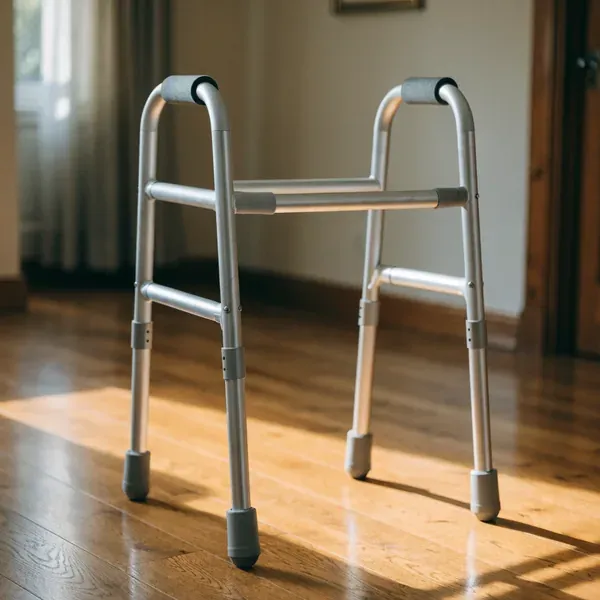 |
 |
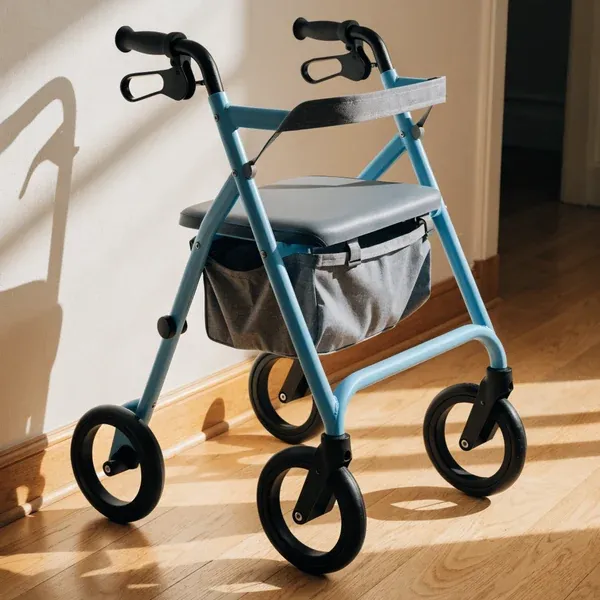 |
| How it helps | Takes some weight off a weak or painful leg and widens the base of support [1] | A large base of support. The most stable walker [1] | Rolls instead of being lifted, for a more normal walking pattern [1] | Easy to push and turn. Usually has a seat for rest breaks [1] |
| Trade-offs | The least stable of all mobility aids. It needs good balance, upper body strength and skilled use of the hands [1] | Has to be lifted with each step, which makes walking slower [1] | Less stable than a standard walker, and it needs more room to turn [1] | The least stable walker. It can roll away if the brakes aren’t on. Not for leaning your weight on [1] |
| Stairs | Some quad canes may not fit on stairs [1] | Walkers make stairs difficult [2] | Walkers make stairs difficult [2] | Walkers make stairs difficult [2] |
Where to buy canes, walkers and rollators
Pharmacies, home health and medical supply stores, and online stores sell canes, walkers and rollators in Canada and the US. Some programs pay part of the cost, so check Costs and funding before you buy. The table lists products whose makers publish their weight limits and sizes. The figures come from the makers’ pages and instructions, linked in the sources. We haven’t tested the products ourselves.
| Option | Type | Maker's weight limit | Handle height and details | Sold in | Where to buy |
|---|---|---|---|---|---|
| Drive Medical Offset Handle Cane RTL10306 [8] | Cane | 300 lb | Handle 30 to 39 in. Offset handle with a foam grip | Canada and US | See it at Amazon: Drive Medical Offset Handle Cane RTL10306 (opens in a new tab) |
| Carex Small Base Offset Quad Cane FGA734C0 [9] | Quad cane | 250 lb | Height 28 to 37 in. Small four-legged base that stands on its own | US only | See it at Amazon: Carex Small Base Offset Quad Cane FGA734C0 (opens in a new tab) |
| Drive Medical Deluxe Folding Walker with 5" Wheels 10210-1 [10] | Two-wheel walker | 350 lb | Handles 32 to 39 in. 5 in front wheels. Folds with two buttons. Weighs 7.5 lb | Canada and US | See it at Amazon: Drive Medical Deluxe Folding Walker with 5" Wheels 10210-1 (opens in a new tab) |
| Stander Wonder Rollator 4350 [11] [12] | Rollator | 250 lb | Handles 33 to 36 in (a short size is 27 to 30 in). 6 in wheels, seat, backrest and basket. Folds small | Canada and US | See it at Amazon: Stander Wonder Rollator 4350 (opens in a new tab) |
| Drive Medical Nitro DLX Rollator RTL10266 [13] | Rollator | 300 lb | Handles 33.5 to 38.5 in. Seat 20 in from the floor. 10 in front wheels. Weighs 22 lb | Canada and US | See it at Amazon: Drive Medical Nitro DLX Rollator RTL10266 (opens in a new tab) |
Weight limits and heights are the makers' figures. Handle height ranges are what the maker lists for the adult size.
More options at Amazon: walking canes (opens in a new tab), folding walkers (opens in a new tab) and rollators (opens in a new tab).
Choosing and fitting a cane, walker or rollator
From simpleaging.com. This checklist is general information, not medical advice.
Take this list to the store or to an appointment with a physiotherapist or occupational therapist.
Before you buy
- A physiotherapist, occupational therapist or doctor has talked about which type suits the person. American Family Physician advises that the device be matched to the person’s needs and fitted properly [1].
- You’ve checked whether a program will pay part of the cost, and whether it needs an assessment first [7] [3].
- The maker’s weight limit is above the person’s weight.
Fit
- The handle is at wrist level when the person stands tall with arms hanging at their sides. Holding it, the elbow bends a little, about 15 to 30 degrees [1] [2].
- A rollator’s seat height suits the person, so they can sit and stand easily. The makers list seat heights, for example 20 in for the Nitro DLX [13].Our rollator size chart compares seat and handle heights by model.
- It fits through the doorways and halls at home, and in the car if it needs to travel.
Use
- The person has been shown how to use it. For a cane, clinicians teach holding it in the hand opposite the weak or painful leg, and moving it forward together with that leg [1].
- With a rollator, they know to lock both brakes before sitting [2] [12].
- Rollator brakes are checked each time it’s used, as Stander’s instructions say [12]. Worn rubber tips and glides are replaced.
How each one works
Canes
A cane widens a person’s base of support and gives more feedback from the ground. Used properly, a cane can take about 10% of the weight off an affected leg [1]. American Family Physician describes three common kinds [1]:
- Standard cane. A single shaft with a curved handle.
- Offset cane. The handle bends so weight goes straight down the shaft. It’s more supportive, and its grip is more comfortable for most people. The Drive RTL10306 (opens in a new tab) is an offset cane [8].
- Quad cane. Four short legs give a larger base and more support, and it can stand on its own. It’s a little heavier and can be awkward on stairs. The Carex FGA734C0 (opens in a new tab) has a small base [9].
The same review says a cane is the least stable mobility aid, and that a person needs enough balance, upper body strength and dexterity to use one safely [1].
Standard walkers
A standard walker has four legs with rubber tips and no wheels. It’s the most stable walker and folds easily, but it has to be lifted and set down with each step, so walking is slower [1].
Two-wheel walkers
A two-wheel walker, also called a rolling walker, has wheels on the front legs and glides or rubber tips on the back legs. The person pushes it instead of lifting it, which keeps a more normal walking pattern. The back legs add some friction so it doesn’t slide away. It’s less stable than a standard walker and needs more room to turn [1]. The Drive 10210-1 (opens in a new tab) has 5 in front wheels [10].
Rollators
A rollator, or four-wheel walker, has wheels on all four legs, hand brakes, and usually a seat and a basket [1]. It’s easy to push and turn, and the seat allows rest breaks. American Family Physician calls it the least stable type of walker, because it can slide out from under a person when the brakes aren’t on, and says it isn’t for leaning your weight on [1]. An earlier review in the same journal advised that the brakes always be on, with the rollator against a wall or other solid object, before sitting [2].
Rollators differ in weight limit, wheel size, seat height and how small they fold. The Stander Wonder Rollator (opens in a new tab) has 6 in wheels and comes in a short size [11]. The Drive Nitro DLX (opens in a new tab) has 10 in front wheels [13].
Features to compare
- Weight limit. The maker’s figure, from 250 lb to 350 lb for the products above [9] [10] [11].
- Handle height range. It should reach the person’s wrist level [1]. Some makers sell short or junior sizes [11].
- Weight of the aid itself. A folding walker can weigh about 7.5 lb, and a rollator over 20 lb [10] [13]. This matters for lifting it into a car.
- Wheels. Sizes range from 5 in on the front of a two-wheel walker to 10 in on the front of the Nitro DLX [10] [13]. Ask which suits the ground the person walks on.
- Brakes and seat (rollators). Loop brakes that lock for parking, a seat height that suits the person, and a backrest [12] [13].
- Folding. How small it folds, and whether one hand can do it.
- Grips and tips. Comfortable grips, and tips and glides that can be replaced.
Costs and funding for walking aids
Prices vary by product, store and region, so we don’t list them. Some programs pay part of the cost.
Canada
Planning changes at home as well, like a ramp? Our tax credit calculator estimates what the Home Accessibility Tax Credit may be worth for a renovation.
United States
Planning changes at home as well, like a ramp? If you itemize, the IRS lets you deduct medical costs above 7.5% of your adjusted gross income, and a ramp made for a disability can count [14]. Our IRS medical expense deduction calculator estimates what you might deduct and whether it would lower your tax.
Questions to ask
A physiotherapist, occupational therapist or doctor
- Which type suits this person’s balance, strength and endurance?
- What height should it be set to? Can you check the fit?
- Can you show us how to use it, including on stairs, curbs and getting in and out of a chair?
- Will the person need a different aid as they recover or as things change?
The store or supplier
- What is the maker’s weight limit, and what does it weigh?
- Does it fold to fit in our car? Can we try it in the store?
- Are replacement tips, glides, wheels and brake parts available?
- In Ontario: are you registered with the Assistive Devices Program? In the US: are you enrolled in Medicare [7] [3]?
Safety notes and when to talk to a professional
Get it fitted. American Family Physician notes that many people get their aid without advice from a medical professional, and that clinicians should check it for proper fit and use [1].
Lock the brakes before sitting. Lock both rollator brakes, with the rollator against a wall or other solid object, before sitting [2]. Stander’s instructions say to check the brakes and brake locking each time you use it, because cables stretch and pads wear [12].
A rollator is not a wheelchair. Rollators aren’t meant for leaning your full weight on [1]. Stander says its rollator is not intended to carry a person’s full weight [12].
Watch the stairs. Walkers make stairs difficult [2]. Our guide to making stairs safer covers railings, lighting and treads.
Clear the way at home. A walker or rollator needs clear paths and room to turn. Our home safety checklist goes room by room, and our guide to preparing a home after a hospital stay covers the first weeks home.
When to talk to a professional. If someone has fallen, feels unsteady or worries about falling, talk to a doctor. A doctor can look for causes and may suggest seeing a physiotherapist or occupational therapist. A physiotherapist or occupational therapist can watch how a person walks and help choose, fit and teach the right aid.