Home safety checklist for seniors (printable, room by room)
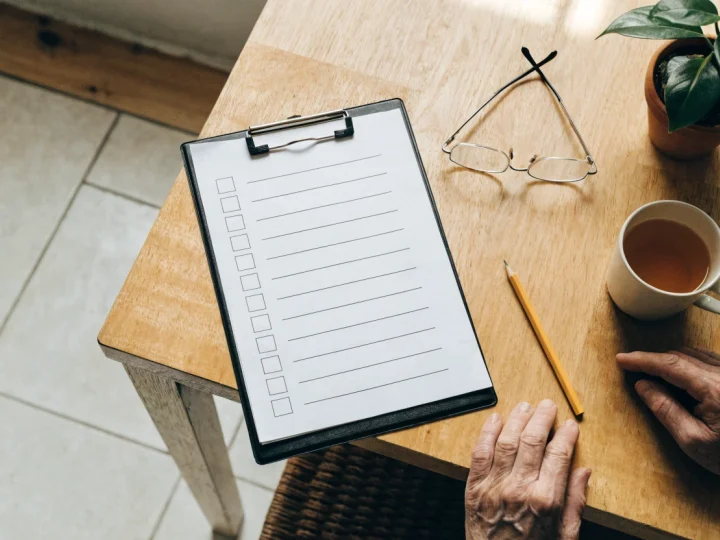
A printable, room-by-room home safety checklist for seniors and families: trip, slip and fire hazards, based on CDC and Public Health Agency of Canada guidance.
This article is general information, not medical advice. For advice about your own situation, talk to a doctor, occupational therapist, physiotherapist or other qualified professional. In an emergency, call 911.
Quick answer
A home safety check means walking through each room and looking for things that could cause a trip, slip or fall, or make it hard to see, reach or get help. Many fixes cost little or nothing, like moving a rug or adding a night light. The printable checklist below brings together guidance from the CDC, the National Institute on Aging and the Public Health Agency of Canada [1] [2] [3].
What a home safety check is
Falls are common as people get older.
Many of the things that make a fall more likely at home can be changed. A home safety check is a simple way to find them. You walk through the home, room by room, with a checklist. You look for:
- things on the floor that could cause a trip or slip
- places that are hard to see because the lighting is poor
- things that are hard to reach
- missing supports, like handrails and grab bars
- smoke and carbon monoxide alarms that are missing or not working
A few tips make the check easier:
- Do the check with the person who lives in the home, if you can. They know how they move around each room.
- Look at the home in the evening too, when poor lighting is easier to notice.
- Fix the no-cost items first. Then plan the purchases and the bigger jobs.
- Check again from time to time, and after any change in health or mobility. If a parent is coming home from the hospital, our guide to preparing a home after a hospital stay has a checklist for the first weeks.
Types of changes at a glance
| Type of change | Examples | Who usually does it |
|---|---|---|
| Moving and clearing | Removing throw rugs, clearing walkways, moving everyday items to lower shelves | You or a family member |
| Small additions | Night lights, a lamp by the bed, a non-slip mat in the tub | You or a family member |
| Installed items | Grab bars, handrails, stair treads, smoke and carbon monoxide alarms | A handy family member, a handyperson or a contractor, following the manufacturer’s instructions |
| Bigger projects | Stair lifts, ramps, walk-in showers | A contractor or specialized installer |
Room-by-room home safety checklist
From simpleaging.com. This checklist is general information, not medical advice.
Use this checklist to walk through the home and tick each item that’s already in place. The items come from the CDC, the National Institute on Aging and the Public Health Agency of Canada [1] [2] [3]. For the alarm and hot water items, see the safety notes below the checklist.
Floors and walkways
- Throw rugs are removed, or held down with double-sided tape or a non-slip backing.
- Walkways are clear. You don’t have to step around furniture, boxes or clutter.
- Nothing is left on the floor, like papers, shoes or books.
- Cords and wires are coiled or taped next to the wall, out of walking paths.
- Tile and wood floors have no-slip strips.
Stairs and steps
- There’s a handrail on both sides of the stairs, as long as the stairs.
- Handrails are firm, not loose or broken.
- There’s a light over the stairs, with a switch at the top and at the bottom.
- Steps are in good repair: not loose, broken or uneven.
- Carpet on the steps is firmly attached, or the steps have non-slip treads.
- Step edges are easy to see, for example with a strip of contrasting colour painted or taped on each edge.
- Nothing is left on the stairs.
Kitchen
- Things you use often are on lower shelves, about waist high.
- If you need a step stool, it’s sturdy and has a bar to hold on to. A chair is never used as a step stool.
- Spills are wiped up right away.
- A fire extinguisher is mounted on the kitchen wall, away from the stove.
Bathroom
- There’s a non-slip rubber mat or self-stick strips on the floor of the tub or shower.
- Grab bars are installed next to and inside the tub or shower, and next to the toilet.
- A night light lights the way at night.
- A raised toilet seat or bath seat is in place, if needed.
- Water from the tap is no hotter than 49°C (120°F).
Bedroom
- A lamp or light switch is within easy reach of the bed.
- The path from the bed to the bathroom is clear and lit, for example with a night light.
- A phone is within reach of the bed.
Entrances and outdoors
- Outdoor steps and walkways are in good repair, not broken or uneven.
- Outdoor steps have railings and a non-slip surface.
- There’s a light at the entrance.
- Snow, ice and anything else that could cause a slip is cleared from steps and walkways.
- There’s a grab bar by the front door.
- The house number is easy to see and lit at night.
Lighting throughout the home
- Every room and hallway is well lit.
- Long hallways have a light switch at each end.
- Night lights or motion-sensor lights light hallways and bathrooms at night.
- Burned-out bulbs are replaced right away.
Alarms
- There’s a smoke alarm on every level of the home, inside each bedroom and outside sleeping areas.
- Smoke alarms are tested every month.
- Every smoke alarm is less than 10 years old.
- There’s a carbon monoxide alarm outside sleeping areas.
Where to buy home safety items
Many items on this checklist are sold at pharmacies, home health and medical supply stores, and hardware stores in both Canada and the US. You can also shop online.
| Option | Where it is used | Installation | Sold in | Where to buy |
|---|---|---|---|---|
| Plug-in motion-sensor night lights | Hallways, bedrooms, bathrooms | None | Canada and US | See options at Amazon: Plug-in motion-sensor night lights (opens in a new tab) |
| Non-slip bath mats | Tub or shower floor | None | Canada and US | See options at Amazon: Non-slip bath mats (opens in a new tab) |
| Reachers (grabber tools) | Kitchen, closets | None | Canada and US | See options at Amazon: Reachers (grabber tools) (opens in a new tab) |
| Adhesive non-slip stair treads | Stairs | Peel and stick | Canada and US | See options at Amazon: Adhesive non-slip stair treads (opens in a new tab) |
| Smoke and carbon monoxide alarms | Every level, near bedrooms | Tools needed | Canada and US | See options at Amazon: Smoke and carbon monoxide alarms (opens in a new tab) |
Costs and funding for home safety changes
Many items on this checklist cost nothing. Moving rugs, clearing walkways and rearranging kitchen shelves only take time. Night lights, non-slip mats and lamps are small purchases. Installed items, like grab bars and handrails, cost more, especially if you pay someone to install them. Bigger projects, like stair lifts, cost the most.
We don’t list prices here because they vary by product, store and region. For installed items, ask for a written quote that includes installation.
Canada
See Funding in Canada for more programs that may help.
United States
Our guide to home modification grants and programs in the US covers other help that may apply.
Questions to ask
A doctor, occupational therapist or physiotherapist
- Which changes on this checklist matter most for me, or for my parent?
- Would a home safety assessment help? How do we arrange one?
- Is equipment like a raised toilet seat, bath seat or grab bar worth trying? Which type and size?
- Could any medicines or health conditions make a fall more likely?
A supplier, contractor or installer
- What is the weight limit, and what do the manufacturer’s installation instructions say?
- Is installation included in the price? Can I have that in writing?
- How will this be attached to the wall, and what is behind the wall at that spot?
- What warranty comes with the product and with the installation?
About funding
- In Canada: does this work qualify for the Home Accessibility Tax Credit or the medical expense tax credit? The Canada Revenue Agency or a tax professional can help.
- In the US: can this cost count as a medical expense? A tax professional can help.
Safety notes and when to talk to a professional
Smoke alarms. Health Canada and the US Fire Administration both say to test smoke alarms every month and to replace any smoke alarm that is 10 years old. Put them on every level of the home, inside each bedroom and outside sleeping areas [11] [12].
Carbon monoxide alarms. Health Canada says homes with fuel-burning appliances (ones that burn gas, oil or wood) need at least one carbon monoxide alarm, most importantly in hallways outside sleeping areas [13]. The US Consumer Product Safety Commission says to put carbon monoxide alarms on every level of the home and outside sleeping areas, to test them every month and to change the batteries every year [14]. Replace the alarms themselves as the manufacturer says.
Hot water. Very hot tap water can cause serious burns, called scalds. In Canada, the Public Health Agency of Canada says to keep the water heater at 60°C (140°F) to stop Legionella bacteria from growing in the tank, and to use a mixing valve so water at the tap is no hotter than 49°C (120°F) [15]. In the US, the Consumer Product Safety Commission urges setting water heaters to 120°F (49°C), and notes that older adults and young children are most at risk of tap water scalds [16]. A plumber can check your water temperature and install a mixing valve.
Step stools. Never use a chair as a step stool. If you need a step stool, use a sturdy one with a bar to hold on to [1].
Grab bars. Grab bars must be attached securely to the wall. Follow the manufacturer’s installation instructions, or have a qualified installer put them in.
When to talk to a professional. If someone has fallen, feels unsteady or worries about falling, talk to a doctor. A doctor can look for causes and may suggest seeing a physiotherapist or occupational therapist. An occupational therapist can also look at the home and suggest changes that fit the person’s needs.