Night lights and falls at night: motion-sensor and more
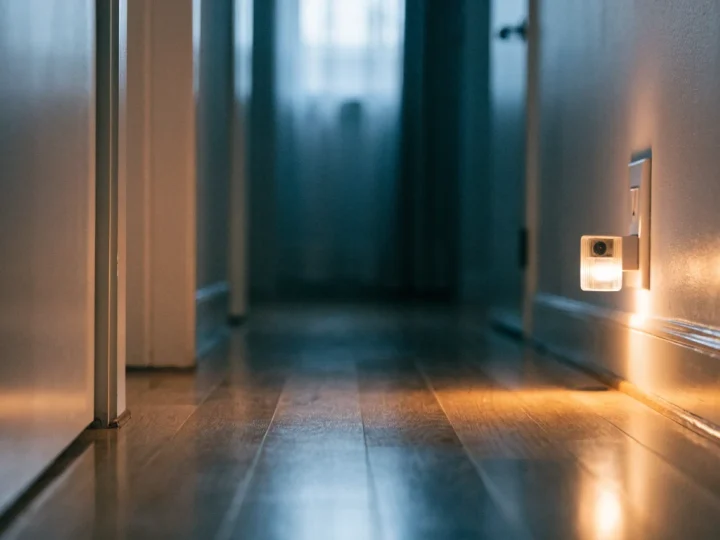
Why the walk from bed to bathroom needs light, how motion-sensor, dusk-to-dawn and battery night lights differ, features to compare, and a path checklist.
This article is general information, not medical advice. For advice about your own situation, talk to a doctor, occupational therapist, physiotherapist or other qualified professional. In an emergency, call 911.
Quick answer
Fall-prevention guides put lighting near the top of the list. The CDC’s home checklist says to put in a night light so you can see where you’re walking from the bed to the bathroom, and notes that some turn on by themselves after dark [1]. A plug-in motion-sensor light turns on only when you move past it, a dusk-to-dawn light stays on all night, and a battery light goes where there’s no outlet. Look for a certification mark, such as CSA, cUL or cETL, on anything that plugs in [4].
The types at a glance
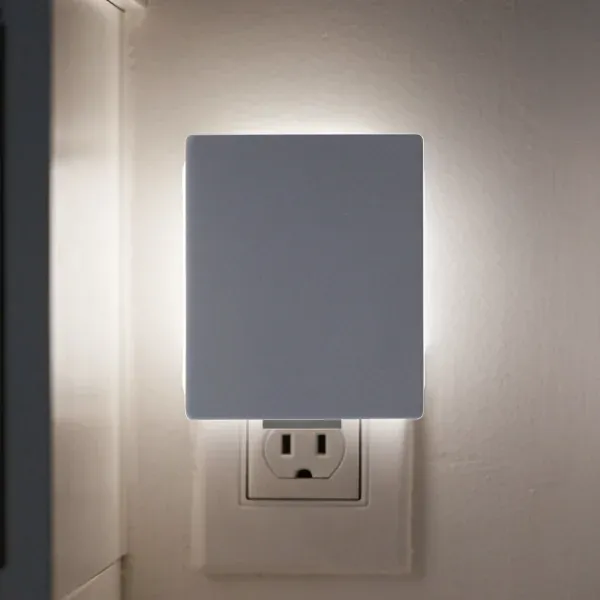
| Plug-in motion-sensor night light | Dusk-to-dawn night light | Battery motion light | |
|---|---|---|---|
| What it looks like | 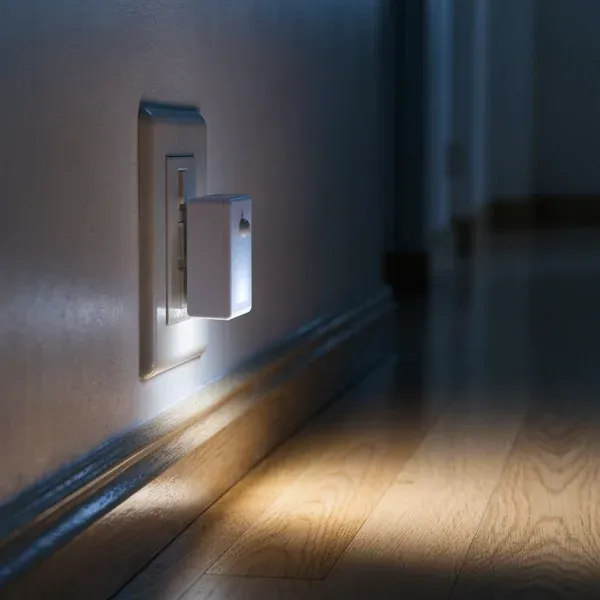 |
 |
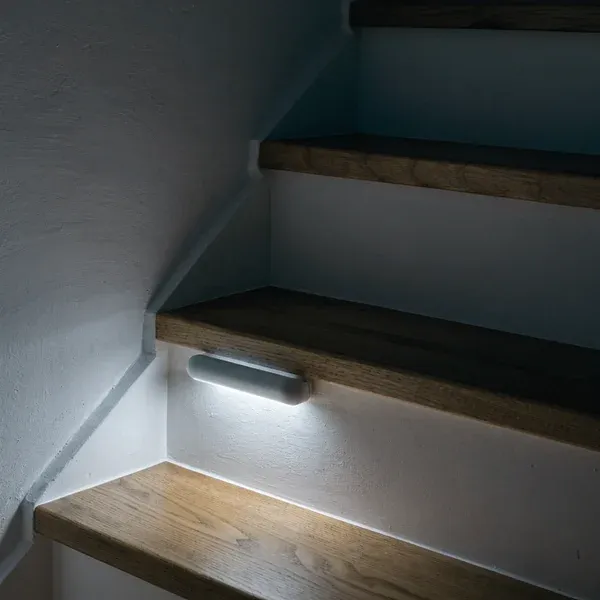 |
| When it’s on | When it senses movement in the dark, then off after a set time. The ones below list 90 seconds [5] [6] | All night, from dusk to dawn [7] | When it senses movement [9] |
| Where it works | Any outlet along the path | Any outlet along the path | Stairs, closets, and halls with no outlet nearby |
| Power | The outlet | The outlet. Some also have a battery for power cuts [8] | Batteries you replace [9] |
| Good to know | Stays off until you move past it | Simple, with nothing to trigger. It uses the outlet all night | Check the batteries. The one below mounts with a magnet and a metal bracket [9] |
Where to buy night lights
Hardware stores, pharmacies and online stores sell night lights in Canada and the US. The table lists lights whose maker publishes their specs. The figures come from the maker’s pages, linked in the sources. We haven’t tested the products ourselves.
| Option | Type | Light | What the maker says | Sold in | Where to buy |
|---|---|---|---|---|---|
| GE Enbrighten UltraBrite Motion Activated LED Night Light 12201 [5] | Plug-in motion sensor | 40 lumens, white | Turns on in low light when it senses motion up to 25 ft away; off after 90 seconds. Keeps the second outlet free. UL listed | Canada and US | See it at Amazon: GE Enbrighten UltraBrite Motion Activated LED Night Light 12201 (opens in a new tab) |
| Enbrighten SleepLite Amber Night Light 88271 (2 pack) [6] | Plug-in, two modes | Amber | Motion-boost mode: a dim amber light from dusk to dawn that brightens for 90 seconds when it senses motion up to 20 ft away. Motion-activated mode: on only with motion. Covers the outlet plate. ETL certified | Canada and US | See it at Amazon: Enbrighten SleepLite Amber Night Light 88271 (2 pack) (opens in a new tab) |
| GE CoverLite Dusk to Dawn Night Light 87942 (2 pack) [7] | Dusk to dawn | White | Turns on and off with the room light. Covers the outlet plate; can be set to leave the second outlet free. Indoor use. UL listed | US only | See it at Amazon: GE CoverLite Dusk to Dawn Night Light 87942 (2 pack) (opens in a new tab) |
| GE 4-in-1 Rechargeable Power Failure Night Light 29679 [8] | Power failure | 10 lumens as a night light; 5 in a power cut; 20 as a task light | Dusk-to-dawn light that comes on by itself in a power cut. Pulls out of the outlet to use as a flashlight. UL certified | Canada and US | See it at Amazon: GE 4-in-1 Rechargeable Power Failure Night Light 29679 (opens in a new tab) |
| Energizer Battery Operated Motion Activated LED Path Light 38183 [9] | Battery motion sensor | White | Senses motion up to 15 ft away. Takes 3 AAA batteries. Magnet mount with a metal bracket, for indoors or out | Canada and US | See it at Amazon: Energizer Battery Operated Motion Activated LED Path Light 38183 (opens in a new tab) |
Figures are the maker's. Lights that plug in should carry a certification mark; the maker lists UL or ETL for these.
More options at Amazon: motion-sensor night lights (opens in a new tab).
Lighting the path at night
From simpleaging.com. This checklist is general information, not medical advice.
Walk the route from the bed to the bathroom after dark, the way you’d walk it half asleep. The items come from the CDC, the National Institute on Aging and the Public Health Agency of Canada [1] [2] [3].
At the bed
- A lamp or light switch is within easy reach of the bed [1] [2].
- A flashlight is by the bed in case the power goes out [2].
- Night lights are near the bed, or a light is left on in case you get up in the night [2] [3].
Along the way
- There’s a night light on the path from the bed to the bathroom [1].
- The path is clear: no cords, shoes, papers or furniture to walk around [1] [3].
- Throw rugs are gone, or held down so they don’t slip [1].
- Long halls have a light switch at each end [2].
In the bathroom
Stairs
- There’s a light and a light switch at the top and the bottom of the stairs [1] [3].
- No stairway bulb has burned out. Glow-in-the-dark switches help you find the switch [1].
The lights themselves
- Anything that plugs in has a certification mark, such as CSA, cUL or cETL [4].
- Motion lights are placed so they catch you as you leave the bed and as you reach the bathroom door, not only once you’re already in the dark hall.
- Battery lights have fresh batteries, and someone checks them.
Why the dark is harder as we age
The Public Health Agency of Canada’s home safety guide explains that, with age, “Eyes take longer to adjust from dark to light and vice versa,” and become more sensitive to glare from unshielded bulbs. Depth perception declines, which can make it hard to judge distances, and contrasts and colours can be harder to see [3].
That’s why the advice from fall-prevention guides is simple: light the path, keep it clear, and make the light easy to reach. The National Institute on Aging suggests motion-activated lights that plug into outlets and turn on by themselves when you walk by, and good lighting with switches at the top and bottom of stairs and at each end of a long hall [2].
Features to compare
- How it turns on. A dusk-to-dawn light uses a light sensor and stays on all night. A motion light stays off until it senses movement, then turns off again after a set time. Jasco lists 90 seconds for the motion lights above, and some lights offer both modes [5] [6].
- Sensor range. The maker’s figure for how far away it senses movement: 15 to 25 ft for the lights above [5] [9]. Put the light where you’ll pass within that range.
- Brightness. Makers give it in lumens. The lights above range from a 10-lumen guide light to a 40-lumen motion light [8] [5]. The Public Health Agency of Canada notes that aging eyes become more sensitive to glare from unshielded bulbs [3].
- Colour. Some night lights use an amber LED. Jasco says its SleepLite’s amber light minimizes “disruptive blue light that can affect your internal clock” [6].
- The outlet. Some lights cover the whole outlet plate; others keep the second outlet free [5] [7].
- Power cuts. A rechargeable power-failure light comes on by itself when the power goes out, and pulls out of the wall to use as a flashlight [8].
- Certification. Health Canada says products that plug into an outlet must meet Canadian safety standards and carry a certification mark, such as CSA, cUL or cETL [4]. The lights above list UL or ETL marks [5] [6] [7] [8].
Costs and funding for night lights
Prices vary by product and store, so we don’t list them. We know of no tax credit or funding program that covers night lights. For larger changes to lighting, such as adding a switch at the top of the stairs, see our Home Accessibility Tax Credit guide and tax credit calculator in Canada, and our guide to home modification grants and programs in the US.
Questions to ask
Yourself, after a night-time walk-through
- Where is the first dark spot after you leave the bed?
- Is there an outlet along the path, or will a battery light do the job?
- Does the bathroom light dazzle you when you turn it on? Would a night light in the bathroom help?
An electrician
- Can we add a light switch at the top of the stairs, or at the other end of the hall [1] [2]?
- Can the switches glow in the dark [1]?
An occupational therapist
- Which rooms and routes matter most for this person at night?
- Would a bedside lamp with a large switch, or a touch lamp, be easier to reach?
Safety notes and when to talk to a professional
Check the mark. Health Canada says to always check for certification marks, such as CSA, cUL or cETL, before buying electrical products that plug into an outlet [4].
Don’t rely on one light. A burned-out bulb or flat batteries can leave the path dark. The CDC’s checklist asks whether a stairway bulb has burned out, and suggests having a friend or family member change it [1].
Light the switch, too. Keep a lamp or switch within reach of the bed, so you don’t cross a dark room to find it [1] [2].
When to talk to a professional. If someone has fallen, feels unsteady or worries about falling, talk to a doctor. A doctor can look for causes and may suggest seeing a physiotherapist or occupational therapist. An occupational therapist can walk the home with you and suggest where lights, grab bars or other changes would help. Our home safety checklist covers the rest of the home, and our guide to preparing a home after a hospital stay covers the first weeks home. If your family is thinking about a camera to check on someone at night, our guide to cameras in a parent’s home starts with consent and covers less intrusive options.