March of Dimes Home & Vehicle Modification Program explained
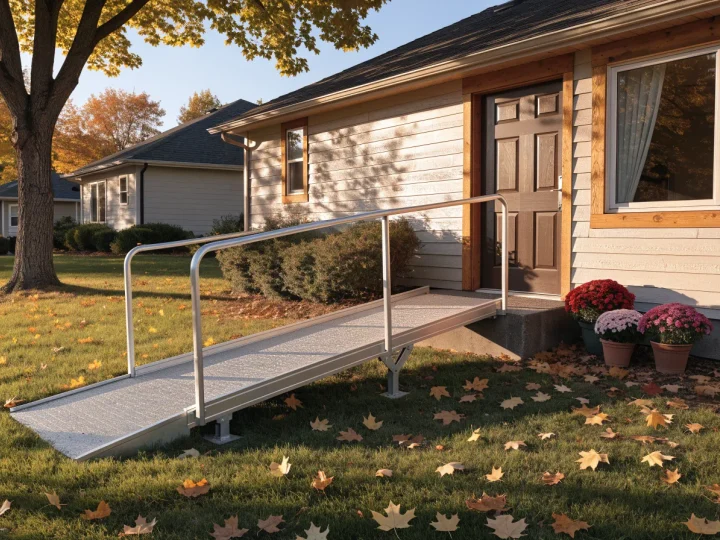
What Ontario's Home and Vehicle Modification Program pays for, the income limits and what you may pay, how to apply through March of Dimes, and what to do first.
This article is general information, not medical advice. For advice about your own situation, talk to a doctor, occupational therapist, physiotherapist or other qualified professional. In an emergency, call 911.
Quick answer
Ontario’s Home and Vehicle Modification Program (HVMP) helps people with a disability that limits mobility pay for changes to their home or vehicle. The province funds it and March of Dimes Canada runs it [1] [2]. It pays up to C$15,000 over a lifetime for home changes, adaptations and devices, and up to C$15,000 every 10 years for vehicle changes [2]. Your household income after tax decides whether it pays all of the cost, part of it, or none [3]. It won’t pay back anything bought or done before it approves your request [4].
Get approval before any work starts
The program says it “will not approve reimbursement of any cost for modifications, adaptations, and devices prior to authorization” [4]. Apply, wait for approval, and only then order equipment or let a contractor start. There’s also no guarantee of funding: it depends on the money available and on how your request is ranked by need [4].
What the HVMP funds at a glance
March of Dimes sorts what it funds into three categories [4]. Its funding is for “basic and essential solutions” to physical barriers in the home that relate to your disability, as recommended by an occupational therapist [4].
| Devices and adaptations | Home modifications (construction) | Vehicle modifications | |
|---|---|---|---|
| What it looks like | 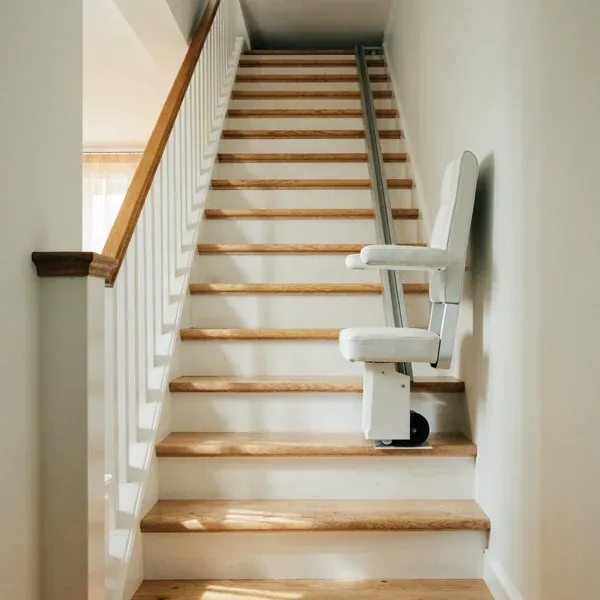 |
 |
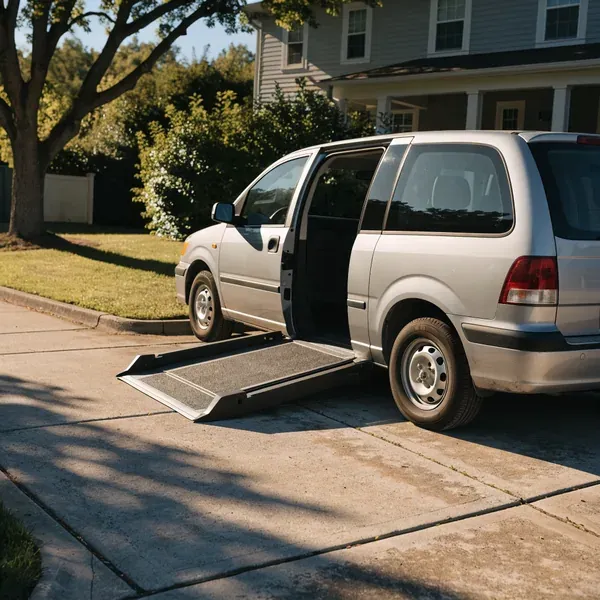 |
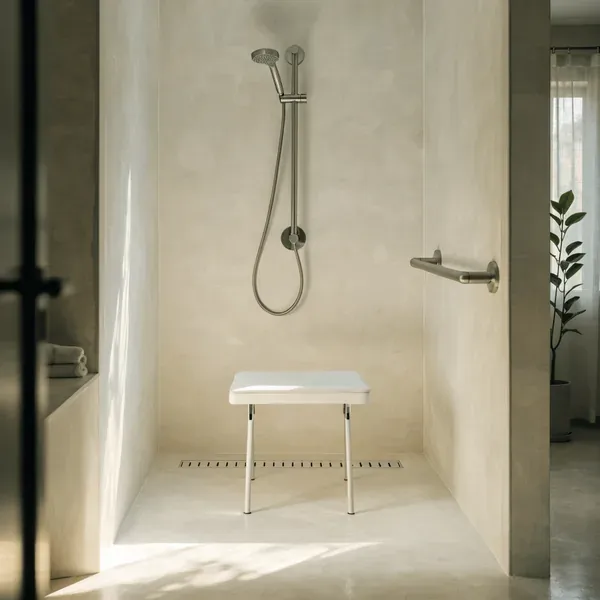
| Examples | Stair lifts, modular ramps, vertical platform lifts, ceiling track and floor patient lifts, tub cut-outs, automatic door openers, a portable roll-in shower or tub-slider system, environmental controls [4] | Wider doors or sliding doors, kitchen changes, a wet room with a zero-threshold roll-in shower, grab bars, a handheld shower on a slide bar and an accessible toilet and sink [4] | Hand controls, left-foot accelerators, swivel and transfer seats, wheelchair lifts, ramps and hoists, lowered floors [4] |
| Limits | Concrete ramps aren’t eligible, and vertical platform lifts aren’t eligible in rentals [4] | Only zero-threshold roll-in showers. If yours won’t fit, it funds portable bathing equipment instead [4] | |
| Funding cap | Up to C$15,000 over a lifetime, for home changes, adaptations and devices together [2] | (shared with devices and adaptations) | Up to C$15,000 every 10 years [2] |
Ontario’s program page lists the same kinds of changes, including ramps, stairway lifts, wider doors and “rearrangement of bathrooms to permit safe use” [1].
Where to buy
Equipment the program funds. The HVMP needs a price quote from a registered medical vendor or supplier, or a contractor, with a detailed breakdown of costs [5]. You choose the supplier, but don’t order until the program approves your request [4]. Stair lifts are among the devices it funds. The table shows three straight stair lifts with their makers’ figures, from our stair lift cost guide. The links go to the makers’ own pages.
| Option | Maker's weight limit | Maker's warranty | Details | Sold in | Where to buy |
|---|---|---|---|---|---|
| Acorn 130 [10] [17] [18] | 300 lb; 350 lb on the HD model | 12 months; extended cover plans available | Battery backup, seat belt, folding footrest and remote control. Fixes to the stairs, not the wall | Canada and US | See it at Acorn Stairlifts: Acorn 130 (opens in a new tab) |
| Bruno Elan [11] | 300 lb | Limited lifetime | Seat turns 90° at the top. Sensors stop the lift if something is in the way. Wireless remotes | Canada and US | See it at Bruno: Bruno Elan (opens in a new tab) |
| Savaria K2 Plus [12] | 400 lb with the Plus seat; 350 lb with the L seat | 36 months on parts | Seat swivels and locks at the top. Sensors on the footrest and carriage, and a seat belt | Canada and US | See it at Savaria: Savaria K2 Plus (opens in a new tab) |
Weight limits and warranties are the makers' figures. Ask each company for a written quote with a cost breakdown, which the HVMP requires.
Low-cost changes. March of Dimes also points to a list of low-cost or no-cost changes, drawn up by Canada Mortgage and Housing Corporation with its help. In the bathroom it suggests a safety mat and grab bars in the tub, a raised toilet seat and a bath seat. Elsewhere it suggests night lights and motion-sensing lights [6]. Many people buy these themselves. The figures below are the makers’. We haven’t tested them.
| Option | Type | Maker's figures | Sold in | Where to buy |
|---|---|---|---|---|
| Moen Home Care 8724 grab bar [13] | Grab bar | 24 in (610 mm), stainless steel; holds up to 500 lb | Canada and US | See it at Amazon: Moen Home Care 8724 grab bar (opens in a new tab) |
| Drive Medical Raised Toilet Seat with Lock RTL12064 [14] | Raised toilet seat | Adds 4 in; locks to the bowl without tools; 400 lb | Canada and US | See it at Amazon: Drive Medical Raised Toilet Seat with Lock RTL12064 (opens in a new tab) |
| Drive Medical Deluxe Aluminum Bath Chair RTL12202KDR [15] | Bath seat | Chair with a back; seat 19¼ by 11½ in; 300 lb | Canada and US | See it at Amazon: Drive Medical Deluxe Aluminum Bath Chair RTL12202KDR (opens in a new tab) |
| GE Enbrighten UltraBrite Motion Night Light 12201 [16] | Night light | Turns on in low light with motion up to 25 ft away; off after 90 seconds; 40 lumens | Canada and US | See it at Amazon: GE Enbrighten UltraBrite Motion Night Light 12201 (opens in a new tab) |
Weight limits are the makers' figures. Grab bars need solid anchoring; our grab bar guides explain the options.
Our guides cover grab bar placement, raised toilet seats, shower chairs and night lights.
Who qualifies
March of Dimes says an applicant must [3]:
- be a permanent Ontario resident (temporary residents and visitors aren’t eligible)
- be in financial need, with household income after tax within the program’s limits
- have a permanent, ongoing or recurring disability that impedes mobility and substantially restricts daily activities, such as eating, bathing, toileting, transferring and moving around, or getting in and out of the home for medical care or community services.
Ontario’s page adds that you must first use any other public or private funding you can get [1]. Your household includes you, your spouse or common-law partner, and anyone else in the home who is 18 or older [3].
Income limits and what you may pay
The limits are for household income after tax. At or below the lower limit, the program pays the full cost. At or above the upper limit, you’re not eligible. In between, you pay part [3].
| Household | Full funding at or below | Not eligible at or above | You pay part if your income is between |
|---|---|---|---|
| 1 adult | C$38,000 | C$54,000 | C$38,000 and C$54,000 |
| 2 adults | C$54,000 | C$65,000 | C$54,000 and C$65,000 |
| 3 adults | C$65,000 | C$71,000 | C$65,000 and C$71,000 |
| 4 or more adults | C$71,000 | C$71,000 | (no partial range) |
Source: March of Dimes’ income limits table [3].
To work out your share, subtract the lower limit for your household from your income. The difference sets the percentage of the cost you pay [3]:
| Your income above the lower limit | Share of the cost you pay |
|---|---|
| C$0 | 0% |
| C$1 to C$5,000 | 10% |
| C$5,001 to C$10,000 | 20% |
| C$10,001 to C$15,000 | 30% |
| C$15,001 to C$20,000 | 40% |
March of Dimes’ table goes on to 50% and 60% for larger differences [3]. With the upper limits above, the difference can’t be more than C$16,000, so in practice the share is at most 40%.
March of Dimes’ example. A couple with C$60,000 after tax asks for a C$12,000 change. Their income is C$6,000 above the C$54,000 lower limit, so they pay 20%, or C$2,400 [3].
Another example, using the same tables. A person living alone with C$45,000 after tax needs a stair lift that costs C$8,000. Their income is C$7,000 above the C$38,000 limit, so they would pay 20%, or C$1,600, and the program the rest.
Applying to the HVMP
From simpleaging.com. This checklist is general information, not medical advice.
These are the documents March of Dimes asks for. It makes one attempt to get missing information [5].
What to send
- The signed application form, from the How to Apply page [5].
- Proof of income: your most recent Notice of Assessment, with your SIN blacked out. For a stair lift, modular ramp, vertical platform lift, tub cut-out or ceiling track lift in a home you own, include one for each homeowner on the property tax bill [5].
- Proof of disability: an occupational therapist’s assessment, or March of Dimes’ Verification of Disability form [5].
- A price quote from a registered medical vendor, supplier or contractor, with a detailed cost breakdown [5].
- Proof of ownership or rental: a current property tax bill, or for renters, a landlord’s letter of approval for a stair lift, modular ramp, tub cut-out, automatic door opener or ceiling track lift [5].
- For curved stair lifts, modular ramps, vertical platform lifts and ceiling track lifts: photos, drawings and measurements. Straight stair lifts don’t need these [5].
Good to know
Renters and condo owners
Renters can apply, but need a written letter of approval from the landlord for a stair lift, modular ramp, tub cut-out, automatic door opener or ceiling track lift [5]. Vertical platform lifts aren’t eligible in rentals [4]. Condo owners need a letter from the condo board approving the project, and March of Dimes doesn’t cover any condo board fees [5]. Our guide to tenants and grab bars explains how to ask a landlord for changes in Ontario.
For construction, March of Dimes says problems found during the work are the homeowner’s responsibility. Its examples include water damage, mold, and electrical, plumbing or code issues [4].
Costs and funding
The HVMP is one of several sources. Ontario expects you to use other funding first [1].
See Funding in Canada for other programs.
Questions to ask
March of Dimes
- Is the change I need something the HVMP funds?
- Based on my household income, will I pay part of the cost?
- What happens if my bathroom can’t fit a zero-threshold shower?
- How long does a decision usually take?
The occupational therapist
- What change would remove the barrier I face, and what’s the simplest option?
- Can you write the assessment the HVMP accepts?
- What size and features should the equipment have?
The supplier or contractor
- Can you give a written quote with a detailed cost breakdown?
- Are you a registered medical vendor or supplier?
- Will you wait for HVMP approval before ordering or starting work?
Safety notes and when to talk to a professional
Start with an occupational therapist. The HVMP funds solutions recommended by an occupational therapist [4]. Their assessment also helps make sure the change fits the person and the home.
Use the low-cost list while you wait. Clearing clutter, securing rugs, adding night lights, and putting grab bars and a mat in the tub are on March of Dimes’ list of low-cost changes [6]. Grab bars need solid anchoring. See our guides to grab bar placement and grab bars on fiberglass and walls without studs.
When to talk to a professional. If someone has fallen, feels unsteady or worries about falling, talk to a doctor. A doctor can look for causes and refer the person to an occupational therapist or physiotherapist.