Ontario Assistive Devices Program (ADP): what it covers
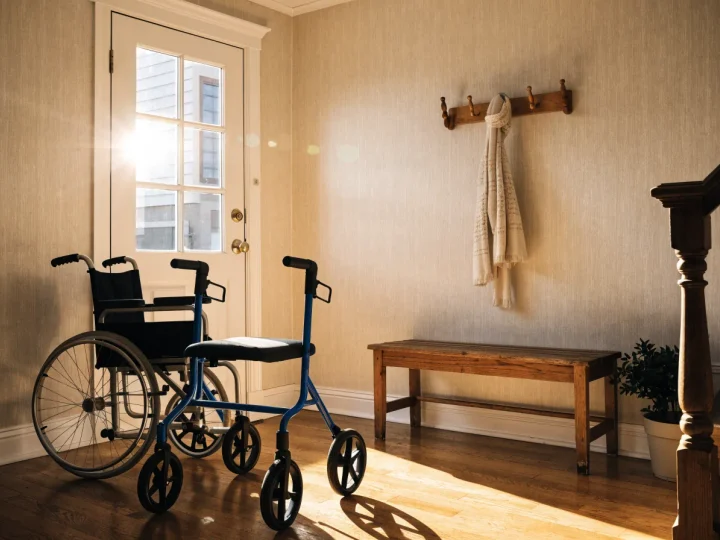
What Ontario's Assistive Devices Program pays for, from wheeled walkers to hearing aids, what it leaves out, who qualifies, how to apply, and what you still pay.
This article is general information, not medical advice. For advice about your own situation, talk to a doctor, occupational therapist, physiotherapist or other qualified professional. In an emergency, call 911.
Quick answer
Ontario’s Assistive Devices Program (ADP) helps people with long-term physical disabilities pay for equipment such as wheelchairs, wheeled walkers and hearing aids. For most equipment it pays 75% of an approved price and you pay 25%. Your income isn’t considered [1]. It doesn’t cover many home safety items: bath seats and benches, grab bars, raised toilet seats, commodes, stair lifts, hospital beds, medical alert systems or home renovations [1]. For most equipment, you must be assessed and apply before you buy, and buy from an ADP-registered business. Otherwise the program pays nothing toward it [2].
What the ADP covers at a glance
The program is divided into device categories, each with its own rules. The ones that matter most for aging at home are listed first.
| Category | Examples covered | Examples not covered | What the ADP pays |
|---|---|---|---|
| Mobility aids | Manual and power wheelchairs, power scooters, positioning devices such as cushions, forearm crutches, wheeled walkers for adults [2] | Non-wheeled walkers, standard walking canes, transport chairs, recliner chairs, wheelchair ramps and lifts, most rentals [2] | 75% of the ADP price; you pay 25% [2] |
| Hearing devices | Hearing aids, FM systems, replacement processors for cochlear and bone-anchored implants, TTYs [3] | Closed caption television systems [3] | 75% of the cost, up to $500 per side for hearing aids and $1,350 for an FM system [3] |
| Visual aids | Specialized glasses and magnifiers, audio book players, braillers, CCTV and computer reading systems, white canes [4] | Regular eyeglasses, talking clocks, GPS systems, braille watches [4] | 75% of the ADP price, or up to a set amount for optical aids [4] |
| Communication aids | Voice amplifiers, speech generating devices, communication boards, writing aids [5] | Telephones, call bells, environmental control units [5] | 75%; some items have a maximum [5] |
| Respiratory equipment | CPAP and other positive airway pressure systems, medication compressors, suction devices, tracheostomy supplies [6] | Replacement CPAP masks and headgear, standalone humidifiers, oral appliances for sleep apnea [6] | 75% of the ADP price; yearly grants for supplies [6] |
| Home oxygen | Oxygen equipment and supplies, delivery, set-up and maintenance [7] | 75%, or 100% if you’re 65 or older [7] | |
| Garments, pumps and braces | Custom orthotic braces, compression garments for lymphedema or burn scars, lymphedema pumps [8] | Devices needed for less than 6 months, shoes and shoe changes, braces for one activity only [8] | 75% [8] |
| Diabetes equipment | Insulin pumps and supplies, real-time continuous glucose monitors, for type 1 diabetes [9] | 100% of the pump’s ADP price; up to $2,400 a year for pump supplies [9] | |
| Ostomy and enteral feeding | Ostomy supplies, feeding pumps and supplies [10] | Yearly grants, for example $1,500 a year for feeding supplies [10] | |
| Prostheses | Breast prostheses, artificial limbs, artificial eyes and facial prosthetics [1] [11] | Grants, for example $195 per side for a full breast prosthesis [11] |
What the ADP doesn’t cover
The program’s own list of items it doesn’t fund includes many of the things families buy to make a home safer [1]:
- bath and shower aids, such as benches, chairs and bath lifts
- grab bars
- raised toilet seats, and commodes or commode chairs
- stair lifts, chair lifts and other lifting devices
- home renovations, including ramps and porch lifts
- hospital beds and mattresses
- life-alert systems (medical alert systems)
- batteries, even for equipment bought through the ADP
- air conditioners and air purifiers, blood pressure monitors, smoke and fire alarms, cellphones, incontinence supplies.
It also doesn’t pay for repairs, which are your responsibility [1]. For home changes such as ramps and stair lifts, see the Home Accessibility Tax Credit and our guide to stair lift costs and funding.
Where to buy
Equipment the ADP funds. To get the program’s 75%, you must buy from a business registered with the ADP, after the assessment and application described below. The mobility aids page has a table of registered businesses [2]. The wheeled walkers below show the kind of equipment the program funds, with the makers’ figures. Buying one online yourself, before applying, means the ADP won’t pay toward it [2].
| Option | Maker's weight limit | Handle height and details | Sold in | Where to buy |
|---|---|---|---|---|
| Stander Wonder Rollator 4350 [13] | 250 lb | Handles 33 to 36 in (a short size is 27 to 30 in). 6 in wheels, seat, backrest and basket | Canada and US | See it at Amazon: Stander Wonder Rollator 4350 (opens in a new tab) |
| Drive Medical Nitro DLX Rollator RTL10266 [14] | 300 lb | Handles 33.5 to 38.5 in. Seat 20 in from the floor. 10 in front wheels. Weighs 22 lb | Canada and US | See it at Amazon: Drive Medical Nitro DLX Rollator RTL10266 (opens in a new tab) |
Weight limits and sizes are the makers' figures. The ADP pays only for a walker bought from an ADP-registered business after your application is approved.
Before the assessment, our rollator size chart shows how to measure for handle and seat height, and compares sizes by model.
Items the ADP doesn’t fund. These are bought without the program, from pharmacies, home health stores or online. The figures are the makers’. We haven’t tested them.
| Option | Type | Maker's weight limit | Details | Sold in | Where to buy |
|---|---|---|---|---|---|
| Drive Medical Deluxe Aluminum Bath Chair RTL12202KDR [15] | Shower chair | 300 lb | Chair with a back; seat 19¼ by 11½ in | Canada and US | See it at Amazon: Drive Medical Deluxe Aluminum Bath Chair RTL12202KDR (opens in a new tab) |
| Carex Bathtub Transfer Bench FGB15300 [16] | Tub transfer bench | 300 lb | Seat height 16 to 20 in; reversible back | Canada and US | See it at Amazon: Carex Bathtub Transfer Bench FGB15300 (opens in a new tab) |
| Drive Medical Raised Toilet Seat with Lock RTL12064 [17] | Raised toilet seat | 400 lb | Adds 4 in; locks to the bowl without tools | Canada and US | See it at Amazon: Drive Medical Raised Toilet Seat with Lock RTL12064 (opens in a new tab) |
| Moen Home Care 8724 grab bar [18] | Grab bar | 500 lb | 24 in (610 mm), stainless steel | Canada and US | See it at Amazon: Moen Home Care 8724 grab bar (opens in a new tab) |
| Carex Deluxe Folding Commode FGB34100 [19] | 3-in-1 commode | 300 lb | Seat height 17 to 23½ in; also works over the toilet | Canada and US | See it at Amazon: Carex Deluxe Folding Commode FGB34100 (opens in a new tab) |
Weight limits are the makers' figures. The ADP's list of items it doesn't fund includes bath and shower aids, raised toilet seats, commodes and grab bars.
Our guides compare shower chairs, tub transfer benches and shower chairs, raised toilet seats and safety frames and grab bar placement.
Who qualifies
To qualify, you generally must [1]:
- live in Ontario and have a valid Ontario health card
- have a physical disability that requires the equipment or supplies for 6 months or longer
- meet the clinical criteria for the device you’re applying for.
Your income isn’t considered [1]. You don’t qualify if you already get help for the same equipment from the Workplace Safety and Insurance Board, or if you’re a Group “A” veteran who gets help for it from Veterans Affairs Canada [1]. Some categories have their own tests. For home oxygen you must meet medical criteria such as low blood oxygen at rest [7], and for visual aids you need long-term low vision or blindness that glasses, contacts or surgery can’t correct [4].
Applying to the ADP for a mobility aid
From simpleaging.com. This checklist is general information, not medical advice.
These are the four steps on the program’s mobility aids page [2]. Most other categories follow similar steps, with a different professional doing the assessment, such as an audiologist for hearing aids or a doctor or nurse practitioner for home oxygen [3] [7].
Before you buy anything
- Get examined by an occupational therapist or physiotherapist registered with the ADP. They confirm you need a mobility aid and which type suits you. Email adp@ontario.ca for a list of registered therapists in your area [2].
- Fill out the application form with the therapist’s help [2].
- Find a business registered with the ADP to sell you the aid. Your therapist can help, and the mobility aids page has a search table [2].
- Let the business finish the form and submit it to the ADP electronically [2].
After you apply
- Wait for the decision. The program aims to review applications within 8 weeks [2].
- If it’s approved, the ADP contacts the business and your therapist, who arrange delivery. You pay your 25% share to the business; the ADP pays its 75% separately [2].
- If it’s denied, the letter explains why and how to follow up, including an appeal [2].
Buying or ordering the aid before these steps are done means you pay the full cost [2].
How much the ADP pays
The ADP uses three funding models, depending on the equipment [1]:
- Fixed price. The ADP pays 75% of its approved price and you pay 25%, plus any optional accessories or services you choose. A registered business can’t charge more than the ADP price for the approved device [1] [2].
- Maximum contribution. The ADP pays up to 75% of an approved maximum, and you pay the rest, which the business sets. Hearing aids work this way, with a maximum of $500 per side [1] [3].
- Grant. The ADP pays you directly for part of the cost, and you buy from any business you choose [1].
100% coverage. If you receive support from Ontario Works, the Ontario Disability Support Program or Assistance for Children with Severe Disabilities, the ADP pays 100% of the approved price or maximum, or the full grant [1]. Home oxygen is also covered at 100% if you’re 65 or older, live in a long-term care home, or get professional services at home through Ontario Health atHome [7].
What you still pay. Your share, optional extras, batteries and repairs [1] [2]. If you can’t afford your share, the program’s page points to Easter Seals Ontario, The War Amps and Lions Clubs [1].
Replacing equipment
You can apply to replace a mobility aid if your condition or ability has changed and it no longer meets your needs, if your body size has changed and it no longer fits, or if it’s worn out, out of warranty and can’t be repaired at a reasonable cost. The ADP doesn’t pay to replace a lost aid, or to repair one damaged through misuse or neglect [2].
Costs and funding
Questions to ask
The occupational therapist or physiotherapist
- Which type of equipment suits me, and is it one the ADP funds?
- Are you registered with the ADP? If not, who nearby is?
- Which registered businesses sell this equipment?
The business
- Are you registered with the ADP for this device category?
- What is the ADP price, and what is my 25% share?
- Which accessories, batteries or services are extra, and what do they cost?
- Who do I call for repairs, and what do they cost?
The ADP
- Has my application been received, and when will it be reviewed?
- If it was denied, what are the reasons and how do I appeal?
Safety notes and when to talk to a professional
The assessment matters as much as the money. The ADP requires an assessment by a registered occupational therapist or physiotherapist before it funds a mobility aid [2]. That visit is also the time to check the fit and learn to use the equipment safely. Our guide to rollators, walkers and canes explains why the wrong walker can make a fall more likely.
Items the ADP doesn’t fund still need care in choosing. Bath seats, raised toilet seats and grab bars have weight limits and need to fit the person and the bathroom. An occupational therapist can advise on them during the same visit.
When to talk to a professional. If someone has fallen, feels unsteady or worries about falling, talk to a doctor. A doctor can look for causes and may refer you to a physiotherapist or occupational therapist, who can also start an ADP application.