Can tenants install grab bars? Rules in Ontario and Canada
What Ontario's standard lease and Human Rights Code say about grab bars in a rental, who pays, how to ask your landlord, and options that need no drilling.
This article is general information, not medical advice. For advice about your own situation, talk to a doctor, occupational therapist, physiotherapist or other qualified professional. In an emergency, call 911.
Quick answer
In Ontario, the standard lease lets a tenant put up decorative items, like pictures, but other changes to the unit need the landlord’s permission [1]. A grab bar screwed into the wall is more than a decorative item, so ask first. If you need it because of a disability, the Human Rights Code means the landlord has a duty to accommodate that need, up to the point of undue hardship [2]. The Ontario Human Rights Commission says the landlord bears the cost [3]. Other provinces and territories have their own human rights laws that cover housing [7].
This article is general information, not legal advice. For advice about your own situation, contact a legal clinic or a lawyer.
Your options at a glance
| Grab bar fixed to the wall | Floor-to-ceiling pole | Clamp-on tub rail | Suction-cup bar | |
|---|---|---|---|---|
| What it looks like | 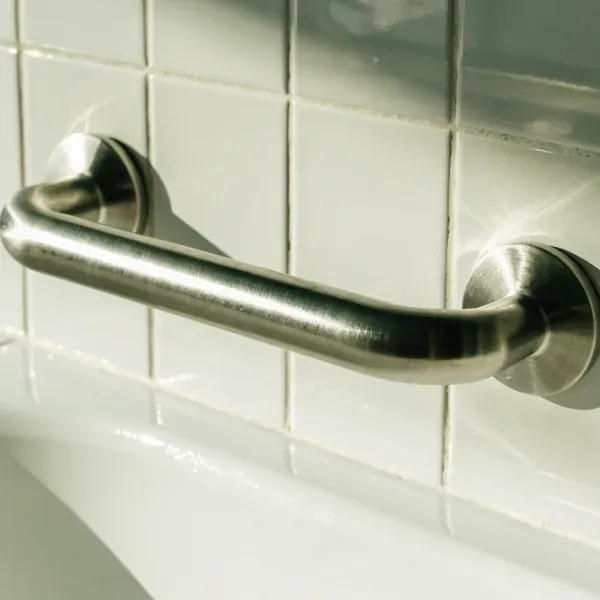 |
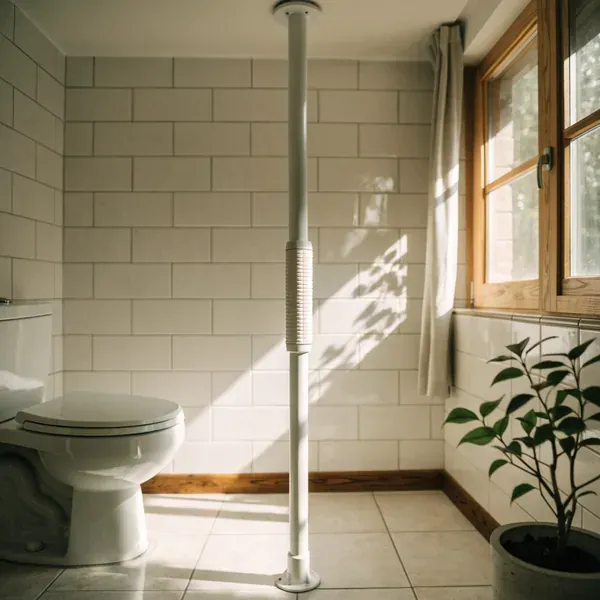 |
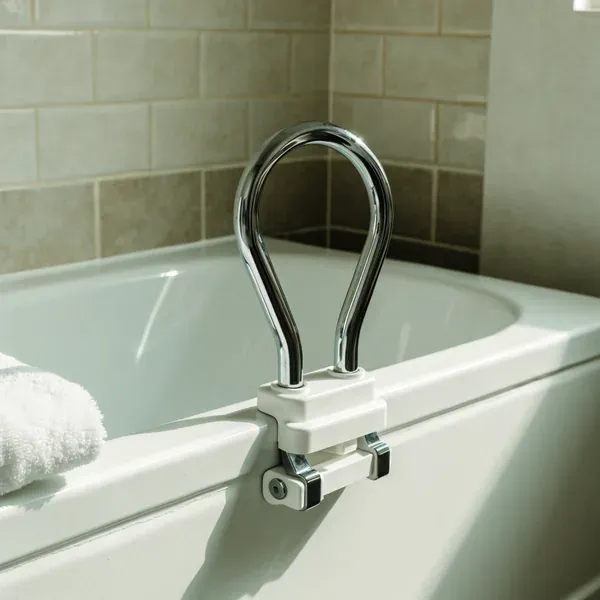 |
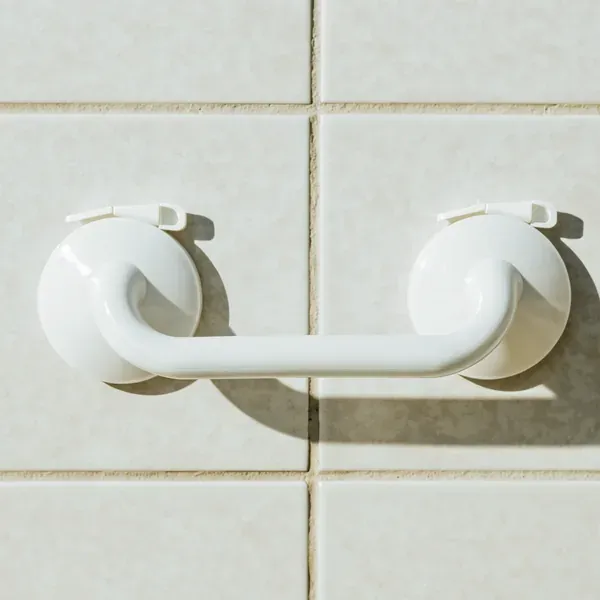 |
| Holes in the wall | Yes, it’s screwed into the wall | No. Held in place by tension between the floor and the ceiling [9] | No. It clamps onto the side of the tub [11] | No |
| Landlord’s permission in Ontario | Needed. Changes other than decorative items need permission [1] | No holes, but ask if you’re unsure | No holes, but ask if you’re unsure | No holes, but ask if you’re unsure |
| Who pays | The landlord, if you need it because of a disability, unless the cost is undue hardship [3]. Otherwise, agree on it in writing | You | You | You |
| Holds your weight | Depends on the bar and how it’s anchored. See the guides linked below | Up to the maker’s limit: 300 lb for the poles below [9] [10] | Up to the maker’s limit: 200 to 300 lb for the rails below [11] [12] | No. Alaska’s Department of Health says to avoid them, because they can let go at random [13] |
Where to buy options that need no drilling
The poles and rails below don’t need holes in the walls. If you’re unsure whether your lease allows them, ask your landlord. The figures come from the makers’ pages, linked in the sources. We haven’t tested the products ourselves.
| Option | Type | Maker's weight limit | Fits, and what the maker says | Sold in | Where to buy |
|---|---|---|---|---|---|
| Stander Wonder Pole 1100 [9] | Floor-to-ceiling pole | 300 lb | Flat ceilings 7 ft to 9 ft 6 in. Tension-mounted, no drilling. Not inside a tub or shower, on a loose rug, or on a paneled or vaulted ceiling | Canada and US | See it at Amazon: Stander Wonder Pole 1100 (opens in a new tab) |
| HealthCraft SuperPole SP-S [10] | Floor-to-ceiling pole | 300 lb | Ceilings 93 to 99 in. HealthCraft says no drilling is required | US only | See it at Amazon: HealthCraft SuperPole SP-S (opens in a new tab) |
| Drive Medical Clamp-On Tub Rail 12036 [11] | Clamp-on tub rail | 300 lb | Tub walls 3 to 7 in wide. Tighten carefully on fiberglass tubs | Canada and US | See it at Amazon: Drive Medical Clamp-On Tub Rail 12036 (opens in a new tab) |
| Carex White Bathtub Rail FGB20400 [12] | Clamp-on tub rail | 200 lb | Flat tub walls 2½ to 5 in wide | Canada and US | See it at Amazon: Carex White Bathtub Rail FGB20400 (opens in a new tab) |
Weight limits are the makers' figures for a product set up as the maker instructs.
If your landlord agrees to a grab bar, our guides to grab bar height and placement and grab bars on fiberglass tubs and walls without studs list bars and anchors with their makers’ specs.
Asking your landlord for a grab bar
From simpleaging.com. This checklist is general information, not medical advice.
These steps follow the Ontario Human Rights Commission’s guidance on how asking for an accommodation works [3] [4].
Before you ask
- Note where a bar would help: beside the toilet, at the tub or shower entry, inside the tub.
- If you can, ask an occupational therapist or physiotherapist where a bar would help most, and at what height.
- Read your lease. In Ontario, changes other than decorative items need the landlord’s permission [1].
Making the request
- Ask in writing, and keep a copy with the date.
- Say what you need and why, without sharing more medical detail than needed. The landlord should only ask for information that’s reasonably related to your needs, and keep it confidential [3] [4].
- If the landlord asks for a doctor’s note or an assessment, the OHRC says the landlord should pay for it [3].
- Offer to work together on where and how it’s installed. Both sides are expected to cooperate [4].
After you ask
- Write down when the landlord replies and what they say.
- If they agree, get the details in writing: who installs it, who pays, and what happens when you move.
- If they refuse or don’t answer, see If the landlord says no below.
How the rules work in Ontario
The lease
The standard lease is required for most residential tenancies signed on or after April 30, 2018. It doesn’t apply to some housing, such as care homes, most social and supportive housing, and co-operative housing. Its section on changes to the rental unit says a tenant can install decorative items, such as pictures or window coverings, but needs the landlord’s permission for other changes. That section can’t be changed. The lease also says the landlord must maintain the unit, and the tenant must repair or pay for undue damage caused by the tenant or their guests [1].
The Human Rights Code
Ontario’s Human Rights Code gives everyone the right to equal treatment in housing [2]. The Ontario Human Rights Commission (OHRC) says housing providers have a duty to accommodate the needs of people with disabilities to the point of undue hardship. Its examples include structural changes to units, such as ramps, automatic door openers and wider doorways. It also says many accommodations can be made easily, and at low cost [3].
The OHRC says housing providers should [3]:
- accept a request for accommodation in good faith, unless there are legitimate reasons not to
- consult the person to find the most appropriate accommodation
- put accommodations in place in a timely way, to the point of undue hardship
- pay for any medical information they need, such as doctors’ notes or assessments
- bear the cost of required accommodation.
Undue hardship. The Code sets three things to consider: the cost, outside sources of funding, and health and safety requirements [2]. The OHRC says the landlord has to prove undue hardship, with evidence that is real, direct and objective, and backed by figures when it’s about cost. It also says that in most cases, accommodations won’t require significant spending [4]. If the best solution would cause undue hardship, the landlord still has to look at next-best steps [3].
Your part. The person asking is expected to cooperate, give relevant information, and meet any agreed standards once the accommodation is in place [4].
Age. The Code also protects older people in housing. The OHRC gives the example of a tenant who develops arthritis and asks for round doorknobs to be changed to handles that are easier to grip [5].
If the landlord says no
Talk first, and ask for the reasons in writing. If you believe your rights under the Code were infringed, you can apply to the Human Rights Tribunal of Ontario, which resolves claims of discrimination under the Code [6]. The Code gives one year after the incident, or after the last of a series of incidents, to apply. Late applications are allowed only in limited cases [2].
The Tribunal points people to the Human Rights Legal Support Centre for legal advice or help with a Code matter. Before you file, it suggests filling in the Centre’s questionnaire, “Have you experienced discrimination?”, to help work out whether you can take legal steps [6].
Outside Ontario
Each province and territory has its own human rights law, and these laws protect people from discrimination in areas such as housing. Complaints often go to the provincial or territorial human rights agency [7]. The Government of Canada keeps a list of provincial and territorial human rights agencies [8]. Your province’s lease and tenancy rules may also say whether you need permission for changes.
Costs and funding for grab bars in a rental
If the landlord installs the grab bar as an accommodation, the OHRC says the landlord bears the cost, unless it’s undue hardship [3].
Questions to ask
Your landlord or property manager
- Can you install a grab bar, or can I have one installed? Where, and by whom?
- Can we put the agreement in writing, including what happens when I move?
- Do the building’s rules say anything about poles or clamp-on rails?
An occupational therapist or physiotherapist
- Where would a grab bar help most, and at what height?
- Would a pole, a clamp-on rail, a shower chair or a transfer bench help as well?
- Can you write a short note for my landlord about what’s needed?
A legal clinic
- Does my situation fall under the Human Rights Code?
- What should I do if my landlord refuses or doesn’t answer?
- What are the time limits where I live?
Safety notes and when to talk to a professional
Avoid suction-cup bars. Alaska’s Department of Health says suction grab bars can let go at random, which makes them a fall danger. Makers may say they’re only for steadying, but in a slip, people grab whatever is there [13].
Follow the maker’s limits for poles and rails. Stander says its pole can’t be used inside a bathtub or shower, on a loose rug, or on a paneled or vaulted ceiling [9]. Drive says to tighten its clamp-on rail carefully on fiberglass tubs [11].
Have grab bars installed properly. Our guides to grab bar height and placement and grab bars on fiberglass tubs explain how bars are anchored to studs, backing or special anchors.
When to talk to a professional. If someone has fallen, feels unsteady or worries about falling, talk to a doctor. A doctor can look for causes and may suggest seeing a physiotherapist or occupational therapist. An occupational therapist can look at the bathroom and suggest changes that fit the person and the rental.