Medical alerts without a landline: cellular and GPS options
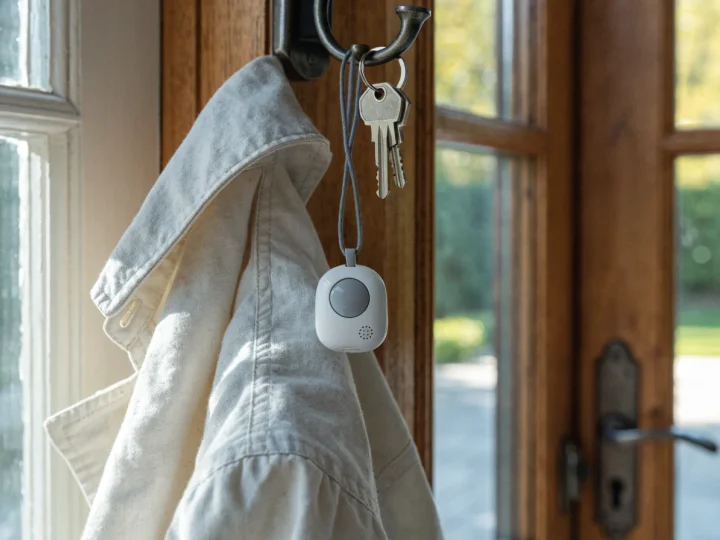
Which medical alert systems work without a home phone line in Canada, how cellular base units and GPS pendants differ, what to check about coverage, and the 3G shutdown.
This article is general information, not medical advice. For advice about your own situation, talk to a doctor, occupational therapist, physiotherapist or other qualified professional. In an emergency, call 911.
Quick answer
You don’t need a home phone line for a medical alert. Two kinds work without one: a cellular base unit that sits in the home and calls the monitoring centre over the mobile network, and a mobile pendant with its own cellular connection and GPS that works wherever there’s coverage [6] [10]. Before you choose, check the cellular signal where the person lives, and ask whether the device uses 4G or 5G, because Canada’s 3G networks are shutting down [2] [3].
The options at a glance
| Cellular base unit | Mobile pendant with GPS | Smartwatch | |
|---|---|---|---|
| What it looks like | 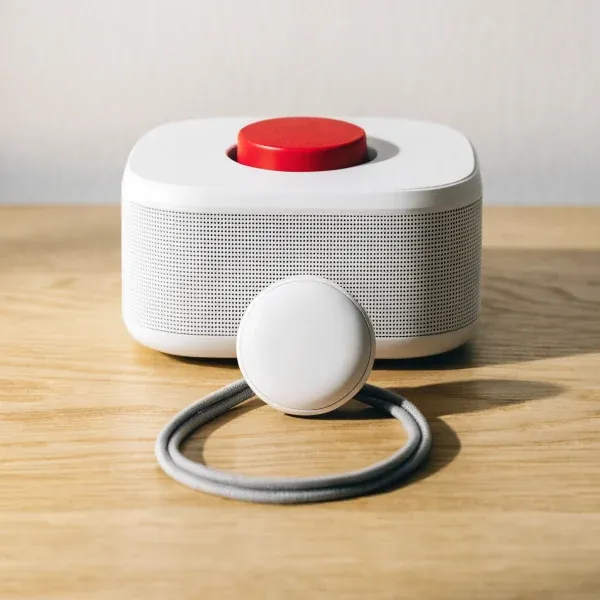 |
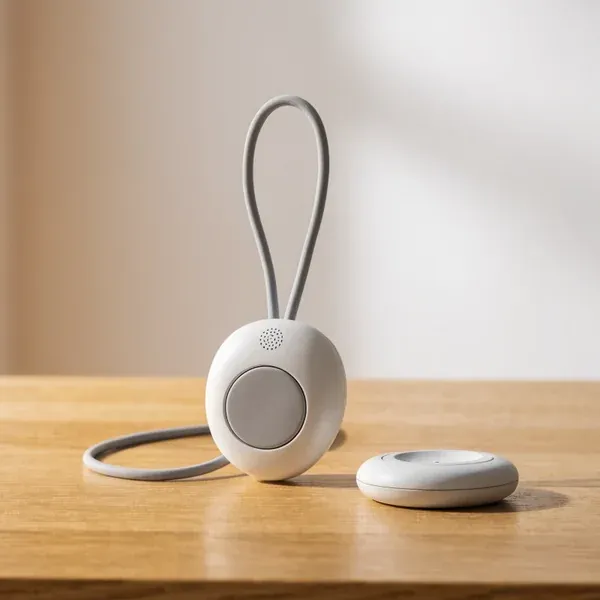 |
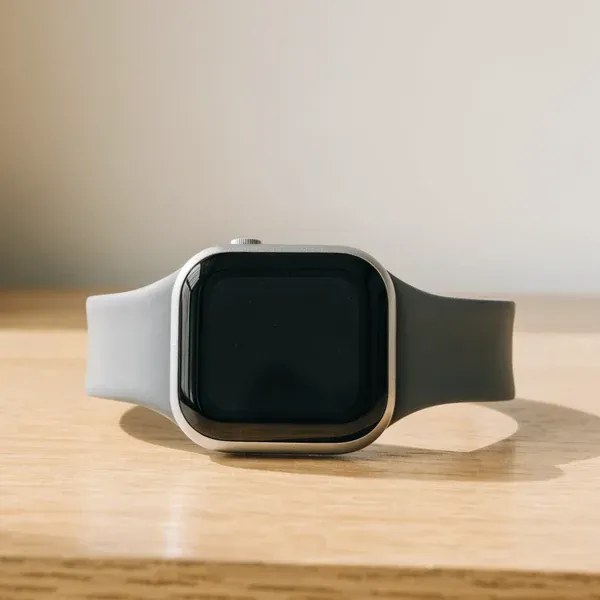 |
| Needs a landline? | No. The base unit has its own cellular connection [4] [7] | No. The pendant has its own cellular connection [8] [10] | No. It reaches help through your phone or Wi-Fi, or its own cellular service [15] |
| Where it works | At home, within range of the base unit. TELUS lists 600 ft [9] | Anywhere in Canada with cellular coverage [10] [12] | Where your phone or the watch has a signal |
| Who answers | A monitoring centre, 24/7 [7] [9] | A monitoring centre, 24/7 [8] [10] | 911 or your contacts, with no monitoring centre [16] [18] |
| Finds your location? | Not usually needed at home. SecurMEDIC lists built-in GPS for its home unit, which it says can be taken along, for example to the chalet [7] | Yes, with GPS. TELUS says location is approximate [10] | Varies. Apple says its watch sends your location to your emergency contacts after it calls for help [16] |
| Charging | The base plugs in. Some list a battery life of years, not days [7] [9] | Every few days: makers list 2 to 16 days [14] [5] | Apple lists up to 18 hours for the SE 3; Samsung up to 40 hours for the Galaxy Watch9 [15] [17] |
| Monthly fee, as listed today | C$34.95 to C$60 [4] [9] | C$45 to C$80 [8] [10] | No monitoring fee. A watch with its own cellular service needs a data plan [15] |
Our medical alert systems guide covers smartwatches in more depth, and lists the in-home plan that needs a landline.
Where to buy a medical alert that needs no landline
You sign up for a monitored plan online or by phone. The table lists the plans that work without a landline from the five providers in our main guide, which sell across Canada and post their prices. The figures come from each provider’s own pages, linked in the sources. We read them on October 13, 2026. Prices and sales change often, so check before you sign up. We haven’t tested these services.
| Option | Type | Monthly fee | Connection and fees | Sold in | Where to buy |
|---|---|---|---|---|---|
| Galaxy Home Cellular System [4] | Cellular base unit | C$34.95 | Galaxy lists 3G/4G/LTE cellular. Backup battery of at least 24 hours. Yearly plans get 2 months free | Canada only | See it at Galaxy Medical Alert Systems: Galaxy Home Cellular System (opens in a new tab) |
| SecurMEDIC SmartSAFE Home [7] | Cellular base unit | C$35 | Cellular plan included. C$99.95 one-time programming fee. No contract. Lists built-in GPS and a battery life of 5 to 7 years | Canada only | See it at SecurMEDIC: SecurMEDIC SmartSAFE Home (opens in a new tab) |
| TELUS Health LivingWell Companion Home [9] | Cellular base unit | C$45 on a 1-year term, or C$60 month to month | C$35 activation fee. Pendant works up to 600 ft from the base. Built-in battery lasts 3 to 5 years | Canada only | See it at TELUS Health: TELUS Health LivingWell Companion Home (opens in a new tab) |
| SecurMEDIC SmartSAFE PLUS [8] | Mobile pendant with GPS | C$45 | Cellular plan included. C$99.95 one-time programming fee. Locates you by GPS, cell towers, Wi-Fi and Bluetooth. Battery up to 3 days. Works across Canada | Canada only | See it at SecurMEDIC: SecurMEDIC SmartSAFE PLUS (opens in a new tab) |
| Galaxy Mobile System with GPS & Fall Detection [5] | Mobile pendant with GPS | C$49.95 | 4G LTE cellular. GPS and Wi-Fi location. Battery 6 to 16 days by mode. IP67 water-resistant | Canada only | See it at Galaxy Medical Alert Systems: Galaxy Mobile System with GPS & Fall Detection (opens in a new tab) |
| Holo Alert Holo Pro [14] | Mobile pendant with GPS | C$49.95 on sale (regular C$64.95), or C$599.95 a year on sale | Built-in cellular and GPS. Battery 2 to 3 days. IP67. Device fee C$89.97 on sale (regular C$299.90), none with the yearly plan | Canada only | See it at Holo Alert: Holo Alert Holo Pro (opens in a new tab) |
| Life Assure Premium Mobile Plus [11] [12] | Mobile pendant with GPS | C$54.95, or C$604.45 a year | GPS and cellular. No contract. Lasts up to 48 hours in a power cut. Fall detection is C$9.99 a month extra | Canada only | See it at Life Assure: Life Assure Premium Mobile Plus (opens in a new tab) |
| TELUS Health Medical Alert Pendant [10] | Mobile pendant with GPS | C$65 on a 1-year term, or C$80 month to month | C$35 activation fee. Works anywhere in Canada with cellular coverage. Battery up to 6 days. IP67 | Canada only | See it at TELUS Health: TELUS Health Medical Alert Pendant (opens in a new tab) |
Fees as each provider listed them on October 13, 2026, before tax. TELUS says existing TELUS Home, Mobility or Koodo customers can save C$10 a month on either plan with a promo code; the lower prices TELUS shows first include that saving.
The next table lists devices you buy once, with no monitoring fee, that need no landline. Each is sold on Amazon in Canada and the US. None of them connects to a monitoring centre.
| Option | Type | How it calls for help, as the maker describes it | Sold in | Where to buy |
|---|---|---|---|---|
| Apple Watch SE 3 (GPS, 40 mm) [15] [16] | Smartwatch | Works with iPhone 11 or later. After a hard fall, if you don't move for about a minute, it calls emergency services, then messages your emergency contacts. Needs a cellular connection or Wi-Fi calling from the watch or a nearby iPhone. Up to 18 hours of battery | Canada and US | See it at Amazon: Apple Watch SE 3 (GPS, 40 mm) (opens in a new tab) |
| Samsung Galaxy Watch9 (Bluetooth, 40 mm) [17] [18] | Smartwatch | Works with Android phones. Fall detection is off until you turn it on; then, if you don't respond for 60 seconds, it sends SOS messages to your emergency contacts. Needs a network connection and a paired phone. Up to 40 hours of battery | Canada and US | See it at Amazon: Samsung Galaxy Watch9 (Bluetooth, 40 mm) (opens in a new tab) |
| Smart Caregiver Call Buttons with Standalone Pager TL-5102TP [19] [20] | Call buttons with a pager | Needs no phone service. Rings a pager that someone in the home carries; doesn't call 911 or a monitoring centre. Up to 300 ft range | Canada and US | See it at Amazon: Smart Caregiver Call Buttons with Standalone Pager TL-5102TP (opens in a new tab) |
Specs are the makers'. The watches are the versions without their own cellular service.
Before you sign up without a landline
From simpleaging.com. This checklist is general information, not medical advice.
Coverage
- Someone has checked the cellular signal in the home, including the bedroom and bathroom. TELUS says poor coverage may mean its device can’t place a call, detect a fall or find your location [10].
- For a mobile pendant: the signal is also checked where the person goes most, such as a daily walk or a family member’s home.
- The provider has confirmed which network the device uses, and that it works on 4G or 5G, not only 3G [2] [3].
Power
- You know what happens in a power cut. Galaxy lists a backup battery of at least 24 hours for its base unit [4], and Life Assure lists up to 48 hours for its mobile device [12].
- For a mobile pendant: charging is part of a daily routine, and you know how the device shows a low battery.
Location
- For a mobile pendant: you’ve asked how the monitoring centre finds you, and how close the fix usually is. TELUS says GPS location is approximate and may not always be possible [10].
- For a base unit: the home address on file is right, and responders can get in. A key lock box is one way, like the Master Lock 5400D (opens in a new tab) that hangs on a door knob or the 5401D (opens in a new tab) that mounts on a wall, each with a 4-digit code you set [21] [22].
Costs
- You know the monthly fee after any sale or first-year price ends, and whether tax is extra.
- You know the one-time fees: activation, programming or the device.
- You know whether there’s a contract, and what it costs to leave early.
Why landlines matter less than they did
Galaxy calls a system that uses a landline its “traditional” one [6]. Many homes no longer have a landline. Statistics Canada reports that in 2023, 60.9% of households in Canada had a cellphone and no landline, up from 20.2% in 2013. Among households with a respondent aged 65 and over, the share was 32.5% [1].
Providers have followed. Galaxy’s answer to “What if I do not have a landline?” is that its home cellular system and mobile systems don’t need one [6]. SecurMEDIC lists “NO Landline Required” for both of its plans [7] [8]. One plan in our main guide still needs a landline: Life Assure’s Classic Home, which plugs into a telephone jack and an electrical outlet [13] [12].
Cellular base unit or mobile pendant?
A cellular base unit gives the same kind of service as a landline system, using cellular technology instead [6]. The base sits in the home. You wear a small button and press it, and you talk with the operator through the base unit; Galaxy lists a two-way speaker on its unit [4]. The button only works within range of the base: TELUS lists 600 ft [9]. Some home systems list a battery life in years rather than days: TELUS lists 3 to 5 years for its home system [9], and SecurMEDIC 5 to 7 years [7].
A mobile pendant puts the cellular connection, the speaker and GPS in the device you wear, so it works away from home. TELUS says its pendant “operates anywhere in Canada where cellular coverage is available” [10]. Life Assure says its mobile device works anywhere in Canada [12]. The trade-off is charging: makers list 2 to 3 days for the Holo Pro [14], up to 3 days for SecurMEDIC’s [8], up to 6 days for TELUS’s [10] and 6 to 16 days for Galaxy’s, depending on the mode [5].
Some people choose both: a base unit at home, where most time is spent, and a pendant for going out. Ask the provider whether a second device can share one account.
How a pendant finds you
Makers combine GPS with other ways of locating the device. SecurMEDIC describes “4-way positioning by GPS, LBS, WIFI and Bluetooth” [8]. LBS means location from cell towers. Galaxy lists A-GPS and Wi-Fi location services [5]. TELUS says plainly that GPS capabilities are approximate and may not always be possible [10]. Ask the provider how its device finds you indoors, and keep the home address on file up to date.
The 3G shutdown
Older cellular devices use the 3G network, and that network is closing. TELUS says its 3G network “will be retiring on March 1, 2027 nationally and on April 14, 2026 in Manitoba,” and that non-compatible 3G devices will lose the ability to make or receive calls, send texts or use data, including reaching 911 [2]. Bell gives the same national date, March 1, 2027, and says the change affects mobile and “IoT devices” that rely on 3G, which includes connected equipment that isn’t a phone [3].
What this means for a medical alert: ask the provider which network the device uses, and whether it will keep working after March 2027. Of the plans above, Galaxy lists its mobile pendant as 4G LTE [5], and its home unit as using “3G/4G/LTE” [4]. TELUS’s pendant page lists LTE operating bands [10]. The other plan pages don’t name the network type, so ask. If you already have an older unit, ask whether a replacement is offered and what it costs.
Costs and funding for alerts without a landline
The plans above cost C$34.95 to C$80 a month at today’s listed prices, before any one-time fees [4] [10]. Funding is limited. Our medical alert systems guide covers what the Canada Revenue Agency, Alberta’s seniors’ program, Ontario’s Assistive Devices Program and Veterans Affairs Canada say, and what Medicare says in the US. See also Funding in Canada and our tax credit calculator for home changes.
Questions to ask
The provider
- Does this device need a landline, a cellular signal, or Wi-Fi?
- Which cellular network does it use, and does it work on 4G or 5G [2]?
- How far from the base unit does the button work [9]?
- How does the pendant find my location indoors, and how accurate is it [8] [10]?
- How long does the battery last, and what happens in a power cut [4] [12]?
- Can I test the signal at home before I commit, and return it if it doesn’t work there?
Family
- Who will make sure a mobile pendant is charged?
- Does the person spend most of the day at home, or out? That decides between a base unit and a pendant.
Safety notes and when to talk to a professional
Test it where you’ll use it. Press the button in each room, and outside if it’s a mobile pendant. Tell the operator it’s a test.
Keep it charged. A mobile pendant only works with power. Learn how it shows a low battery; TELUS’s pendant lights up when it needs charging [10].
Don’t count on fall detection to call for you. Makers say it can’t detect every fall [14] [16] [18]. Press the button if you can; see the fall-detection section of our main guide.
Plan for the 3G shutdown. If a device is more than a few years old, ask the provider now whether it will keep working after March 1, 2027 [2] [3].
When to talk to a professional. If someone has fallen, feels unsteady or worries about falling, talk to a doctor. A doctor can look for causes and may suggest seeing a physiotherapist or occupational therapist. An occupational therapist can see how a person manages at home and suggest changes, equipment or a call system that suits them. Our home safety checklist goes room by room.